Interview: Tanya Pell and Her Wicked Roots

Today, I am joined by the fantastic Tanya Pell to discuss her upcoming novel, Her Wicked Roots, which will be out on October 7th! Since we both have forthcoming works inspired by Nathaniel Hawthorne’s story “Rappaccini’s Daughter”, I thought it would be fun to chat with Tanya and geek out over the Gothic. You can catch my Hawthorne-inspired novelette in my collection Cyanide Constellations, out on October 21st.

Tanya Pell is a narcoleptic horror author who drinks bougie coffee and lives in the American South. She is the author of Her Wicked Roots, Cicada, and several short stories featured in anthologies like Fever Dreams, Mother Knows Best and OBSOLESCENCE.

Sara Tantlinger: I am so excited to read Her Wicked Roots. So excited in fact that I almost pre-ordered it twice! That cover and the foiled edges look spectacular. What drew you to using “Rappaccini’s Daughter” as inspiration?

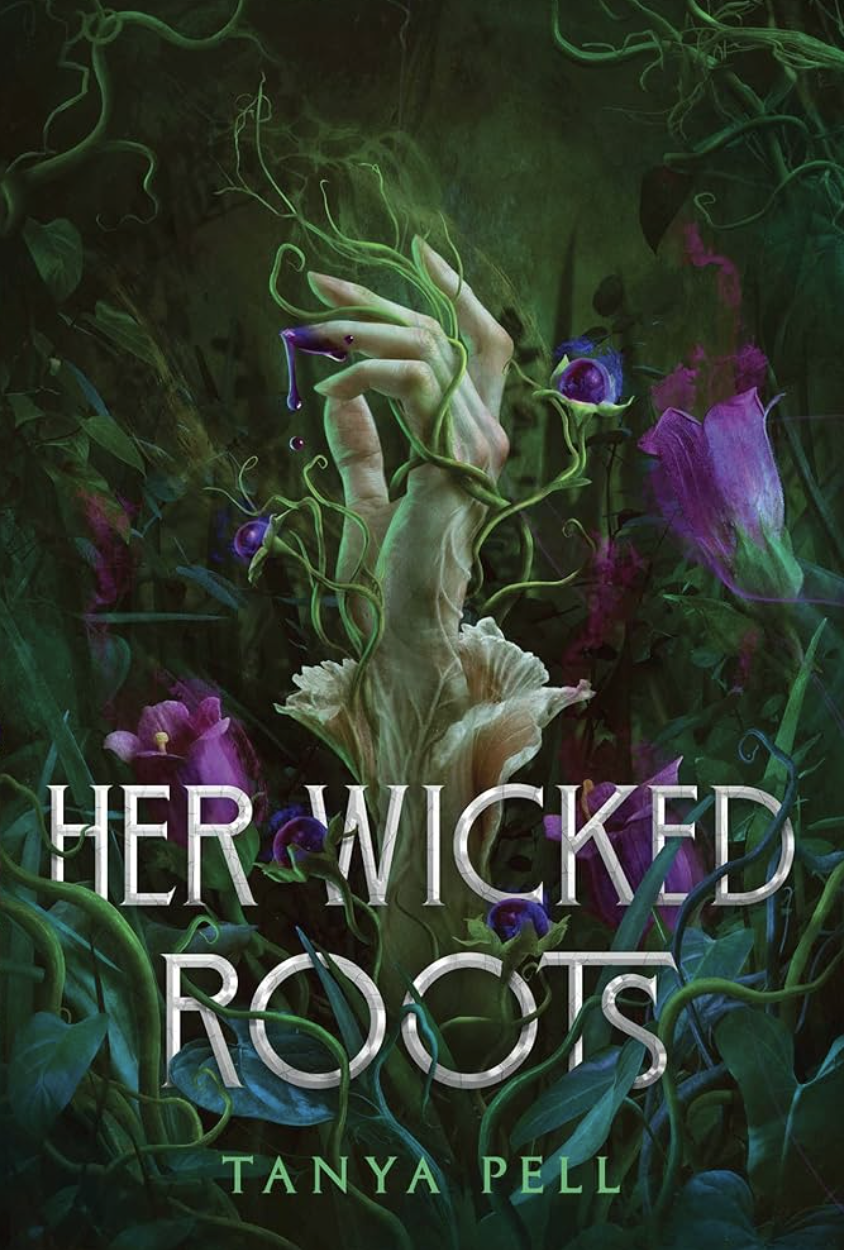
Tanya Pell: Thank you!!!! Yes, they definitely spoiled me with the sprayed/stenciled edges. I thought I might get lucky to get sprayed. Artists are magical. And I had always wanted to work with Marcela Bolivar (artist) so when they asked if I had any idea who I wanted for the cover artist I knew exactly who and she was kind enough to accept.

I used to teach “Rappaccini’s Daughter” in the before time as a HS teacher and it was part of my Gothic fiction unit. It’s one of my favorite short stories and scrolling through Twitter one day I saw someone ask why nobody had ever reimagined the story before and it was honestly one of those, “WHY NOT?!” moments. I think I had a full outline by end of business day? The characters were just sort of there. And I knew I wanted it to be a sister story as much as a lust story.

Sara Tantlinger: I love that! And what a fantastic story to have taught. Do you have any other favorite works by Nathaniel Hawthorne? “The Birth-Mark” is one I think about a lot. It has so many similar themes to “Rappaccini’s Daughter” in which a man thinks he knows better and tries to transform the woman in his life through chemicals and strange botany. But surprise, surprise, she dies. Yet, Hawthorne’s depiction of women’s suffering is often tender and sympathetic.

Tanya Pell: “The Birth-Mark” is one I think about a lot, too! This poor woman who submits to her husband’s experiments because he finds her less than perfect. Her one flaw becomes so irritating to her husband that she would literally rather die than cause him distress! I think it is interesting how Hawthorne is most known for these anti-patriarchal stories (most notably The Scarlet Letter) that show the women suffering socially, emotionally, and physically, and yet there is always this vein of misogyny running through them. You get a sense of him saying, “Oh, sure, the women are suffering and isn’t it upsetting, but look how sad the man is by it all! He feels terrible for his part in it and will do better.”

It is one of the reasons I wanted Her Wicked Roots to be a story featuring a mother rather than a father; who perverts her own Eden out of her loathing for the patriarchal system she was born into. I wanted the women to fight back rather than just be victims we empathize with. The problem, of course, is what that ends up looking like. So you have Hawthorne’s underbelly of “fight the patriarchy” with this house full of women, but they’re not exactly any better once you get in there.

Sara Tantlinger: Yes! It’s so interesting to me how Hawthorne gave us these female characters who seem so perfect to take things a step in directions he probably never would have dreamed of. That balance of what was progressive for his time versus what he was too deep in the patriarchal system to see is really intriguing to dissect.

I love that Her Wicked Roots is a queer retelling, too. In Hawthorne’s original story, Beatrice Rappaccini is very much the “other” and is seen as something both monstrous and alluring—the things that make her “forbidden” are also the traits that entice others toward her. I’d love to hear more about Her Wicked Roots and the queer inspiration we can find in the story. Did the otherness of Beatrice inspire your original characters?

Tanya Pell: When I thought of Beatrice’s isolation, I thought of what that might really do to a person. And what if there were two? So it became a sister story and I wanted to look at how might they have been affected by this isolation and upbringing. What lessons take root and which don’t? It’s a story about the dichotomy of women in a lot of ways, which I think Hawthorne sort of neglects. Beatrice was, like you said, alluring and monstrous, but her otherness makes her a sort of prize that Giovanni ultimately rejects. He despises what she is without caring about who she is. With Her Wicked Roots, I wanted to actually make the otherness feel like home for a character who has always felt othered herself. Here, among these women–some of whom are queer like her or orphaned like her or xyz like her–she may find acceptance. Or she may find something else entirely!

Sara Tantlinger: I love what you said about Giovanni ultimately rejecting the prize he had chased after. That’s something I tackle in “The Revenge of Rappaccini’s Daughter” in my fiction collection (Cyanide Constellations) and I have to say, it was satisfying to give Beatrice both the power to embrace her beautiful monstrosity and to use it in an unforgiving way. Women are always expected to be kind and forgiving, which is a ridiculous double-standard. Sometimes the girlies just want revenge!

Botanical/nature horror seem to be themes that we both are drawn to. It’s such a vast playground of inspiration. Some of the most beautiful and horrifying things that exist are found in nature. When combining nature and horror, what are your favorite elements to play around with? Do you have any advice for writers who want to infuse more nature into their horror works?
Tanya Pell: We’ve been anthropomorphizing plants for thousands of years. The Ents, the burning bush, dryads, Jubokko. Humans are great at making things more like us. But also, like you mentioned before, other. They aren’t us. Perfect conditions for a horror.

I love the book The Hidden Life of Trees and research regarding how plants communicate with each other, protect each other, or sometimes starve their siblings out of existence. It’s all part of a bigger system and I think we all know that, but it is easy to sort of forget? But when you sit with it and look at roots and compare them to veins and consider what a plant needs to survive compared to what a human requires and you think, huh. There’s a juxtaposition you can really play with balancing beauty and horror using nature.

Sara Tantlinger: Absolutely. That juxtaposition is endlessly fascinating and such a rich source for inspiration (both beautiful and horrifying). And finally, if there’s anything else you’re working on or have coming up, please feel free to let us know and drop any links here to your socials or books.

Tanya Pell: Oh boy.

Her Wicked Roots releases Oct. 7! I have a short story called “It Has Eyes Now” I coauthored with Christopher Golden for the anthology Fever Dreams out Oct. 14. Three of my previously published stories will be releasing in an ebook anthology of 101 Horror Stories: Shortwave Publishing Collected Stories out in September. And I have a new story in Twisted Tales to Tell in the Night: A Halloween Horror Anthology releasing Sept. 16.

I think that’s all I’m allowed to say for now? Haha! Hoping to make a couple more announcements soon, but you know how that goes.

The easiest place to find me is on Instagram @tanya.pell or on my website tanyapell.com which has links to all my socials, books, and events.

Thank you so much for having me!!!!! We love a Goth girl and I’m so glad to be part of the Goth Girl Renaissance!!!!
Cyanide Constellations: ToC

We are only two months away from the launch of my debut collection, Cyanide Constellations and Other Stories! The collection can currently be pre-ordered through Dark Matter Ink here!

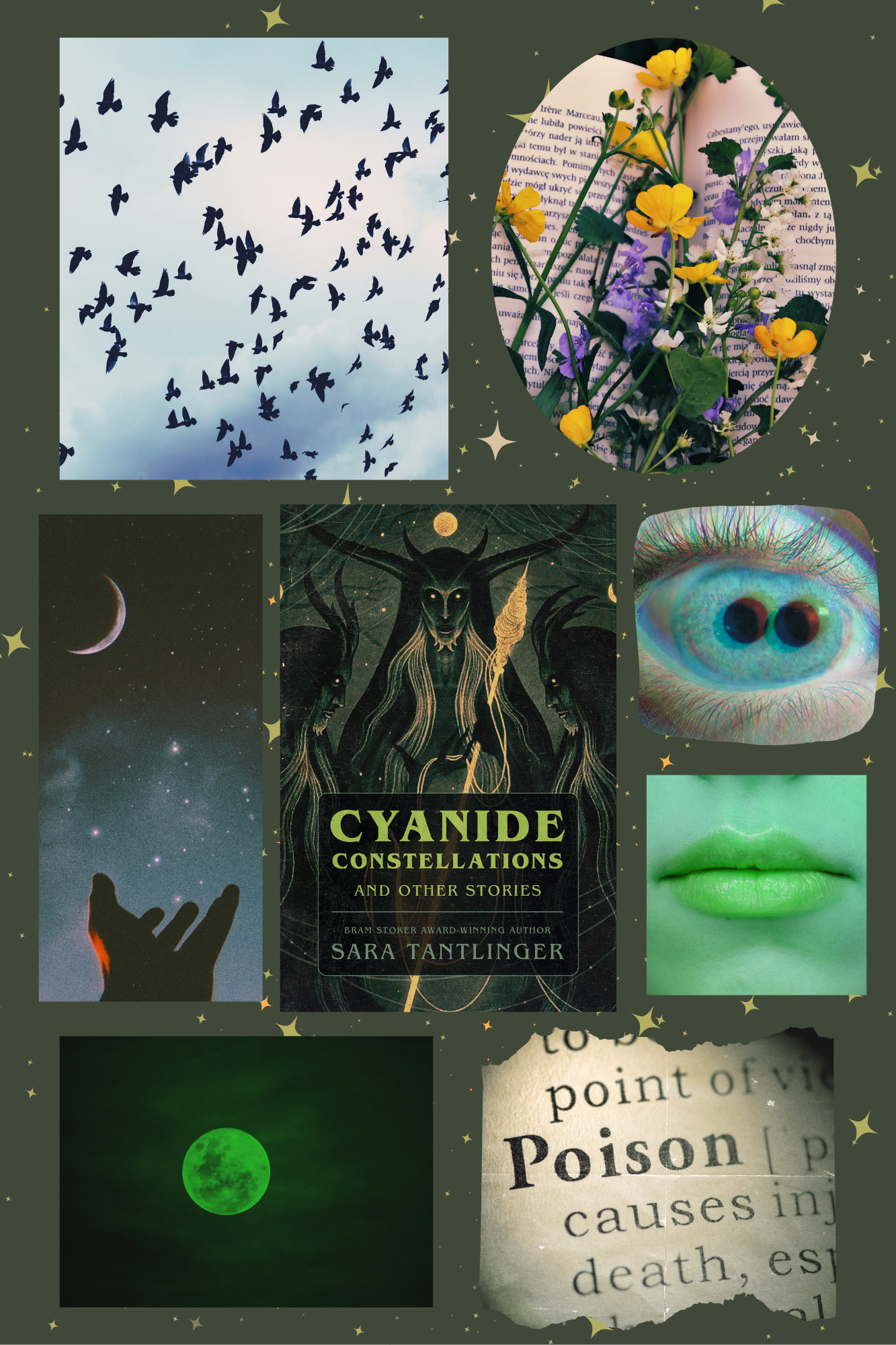
I’m so excited to get this book out there in the world. I thought I would do a little promo today with the above mood board and a brief look into the table of contents!

“The Viridescent Dark” opens up the collection and it’s a story I originally had published in The First Five Minutes of the Apocalypse, edited by the wonderful Brandon Applegate. I loved writing this story. It’s a somber piece about looking up to the once familiar moon and seeing it covered in a destructive algae bloom. I also named a cat Walt Whisker in this one, which seems important to note.

“As Humans Burn Beneath Us” made its first appearance in Field Notes from A Nightmare: An Anthology of Ecological Horror — such a fantastic anthology edited by Alex Ebenstein. It continues with the theme of Nature vs. Humans, but is told entirely from the point of view of clouds as they drift away during Earth’s final days.

“The Bones He Planted” was part of Seasons of Severance and is a very heavy grief story that focuses a lot on nature and our bodies returning to nature, though maybe in an unconventional way. I love stories where people morph into weird things, so creating an alien tree inspired by the Bullhorn Acacia and its symbiotic relationship with aggressive ants was a delightful way to experiment with grief, love, and the circle of life.

“A Haunting of Lawn Ornaments” is one of the brand new stories to this collection and I wrote it to help break up how bleak the collection is. I love pouring my whole being into the gloom when it comes to writing, but having a more lighthearted piece with a twisted sense of humor was a fun challenge for me to write. Within, find garden gnomes and other lawn ornaments possessed by evil spirits as they take some vengeance out on an HOA neighborhood. All those strict ordinances aren’t going to help these folks…

“The Revenge of Rappaccini’s Daughter” is my favorite in the collection and the one I’ve been talking about the most because it was just so fun to take one of my most beloved stories in the public domain and play around with Nathaniel Hawthorne’s characters. It’s easy to assume Hawthorne would hate what I’ve done to this story, but at the same time, he might not. Despite very much being a product of his time (though I hate that phrase) and holding up many traditional roles as a man in the 1800s, Hawthorne also seemed eager to disassociate himself from his great-great-grandfather, a vicious judge during the Salem Witch Trials. There were other cruel relatives of Hawthorne’s (who spelled their last name without the “w”) who Hawthorne never seemed to take pride in being related to. Additionally, Hawthorne often wrote of tragedies befalling women in rather sympathetic and thoughtful ways, so I can’t help that think maybe he would be on board with my version of Beatrice Rappaccini finally getting a little vengeance of her own. Also, stay tuned on my blog because I will later be interviewing the fabulous Tanya Pell about her upcoming novel Her Wicked Roots, a queer retelling of “Rappaccini’s Daughter” — I seriously can’t wait to read that book!

“Cyanide Constellations” made its first appearance alongside the earlier mentioned “The Bones He Planted” (both in Seasons of Severance). This is a weird, poetic little piece that combines nature and cosmic horror in a way that really spoke to my heart. It allowed me to play with point of view, go wild with my tendency to infuse poetic prose into my pieces, and create something sorrowful but hopefully beautiful. I chose this one as the title piece because I think it strongly captures the vibes of poison, nature, complex relationships, and exploring the unknown that this collection focuses on.

“With Radium on Her Lips” is a horrormance story that was first published in Dark Dispatch Issue # 2: Deadly Love. Inspired by the dreadful accounts of what happened to the infamous Radium Girls, this sapphic story focuses on a witch who lost her lover to the poison of the watch factory. Oddly, I think this story has one of the happier endings of the ones in this collection.

“Avian Eyes” focuses on birds because of course I had to have a bird story in here! If you came to our birds in horror panel at StokerCon (which was such a delightful panel), I mentioned I had a story about birds migrating to the moon and it is this piece! I had come across this article in Audubon Magazine that mentioned how in the 1600s, English minister Charles Morton theorized birds migrated to the moon for the winter. It was such a fabulous theory for some fowl inspiration.

“Moonflowers” previously appeared in The Horror Collection: Yellow Edition. It tackles the sorrow of a widow who must deal with her late husband’s obsessive brother, twisted secrets, and a haunting of her own making.

“Acidic Atonement on Sulfur Planet” was written for The Wicked Library podcast and is a longer piece that explores how even if we did find another habitable planet that could provide resources, we’d likely end up exploiting the poor and downtrodden as laborers. The main character in this one is complex, flawed, and entirely human. This piece goes deeper into cosmic horror than I normally write, but I have a soft spot for this story.

“Gardening by Moon: A How-To Guide” is inspired by the Farmers’ Almanac planting calendars. It was fun to play around with format a little in this piece and have a flash story between two longer stories. What are we planting? Well, you’ll have to read that one to find out…

“After the Twilight Fades” was originally published in Apex Magazine, Issue 136, which was seriously a highlight of my career because I’m a huge Apex fan. I’m grateful to have the story reprinted here in my very first collection. This story was inspired by a freelance client of mine who had old journals about hypnotism he wanted typed up since the pages were fading. The journals were written by my client’s late friend, who was a notorious hypnotist in Pittsburgh decades ago. It was neat to draw inspiration about hypnotism from such a unique source.

Delicious Horror: Kristy Park Kulski

Welcome back to the final post in the Silk & Sinew edition of Delicious Horror! My last guest is none other than the editor of Silk & Sinew, my dear and brilliant friend, Kristy Park Kulski! Thank you so much to Kristy and all of the authors who contributed such insightful and inspiring posts, and so many delicious recipes to try! I can’t recommend the anthology enough — order your copy today!

KRISTY PARK KULSKI is a Hawaii-born Korean-American author, historian, and career vampire of patriarchal tears. Channeling a lifelong obsession with history and the morose she’s managed to birth the gothic horror novel, Fairest Flesh, and novella, House of Pungsu. She bartered nine years of her life to the U.S. Navy and Air Force for food and later taught college history for a captive audience. Trapped by a force field, she currently resides in the woods of Northeast Ohio where she (probably) brews potions and talks to ghosts. Follow her on Bluesky @garnetonwinter or garnetonwinter.com.

Editor of SILK & SINEW and author of the short segment found in the anthology, “Glimpses into the Historical Context”

This anthology grew from a lack of representation for the Asian diaspora, from being seen as a perpetual foreigner, and how we are often erased from histories of the areas we live… yet here we are contributing and weaving the very the fabric of these regions. Further, we have far reaching histories of our own. Diasporas create their own unique cultures that are often a blend of many influences.

I decided to pair a common food found in Hawaii: musubi. To me, it’s the epitome of how the Asian diaspora has blended and created something new and unique to itself, while simultaneously rooted in the history of war and colonialism. It’s a humble food with humble origins.

Colonial plantation owners imported labor during the 19th and 20th centuries, purposefully diversifying ethnic groups in an effort prevent unity. Japanese, Chinese, Filipino, Korean, and Portuguese laborers arrived and were forced to live and work in horrible conditions. During WWII, Spam, inexpensive, easily stored, and long lasting, the U.S. government not only feed the troops with it, but rationed it to populations in occupied regions, such as Japan, the Philippines, and South Korea. (It was also fed to Japanese-Americans in the interment camps.)

For Koreans, Spam is a significant part of our cuisine. Starving and struggling with the war-torn landscape after the Korean War, people came to rely on it as a source of protein. There’s a complex relationship of war, colonialism, and racist abuse tied up with Spam. But it’s also become a well-loved part of many cuisines, including Hawaii, likely making its way there via the U.S. military.

Musubi was born from Barbara Funamura, who is believed to have created the dish in the 1940s. I’ve also heard an origin story that links it to plantation workers, but that might have been just talk story i.e. gossip. Musubi is created from all these elements coming together in the face of adversity.

A few months ago, I went to a botanical garden which had a Hawaii themed greenhouse, which included an informational display of foods of Hawaii. I laughed when I saw a plastic model of musubi. Then I sort of reflected on how odd that this dish, universal in Hawaii would be presented as if in a museum. It would sort of be like having a plastic model of a grilled cheese sandwich. In Hawaii, musubi is easily found everywhere you need to grab quick to-go food, often in convenience stores. I miss that now living in the mainland. It’s also great to pack in work and school lunches, as my daughter can attest.

Hope you enjoy this simple recipe!

You don’t need a link!

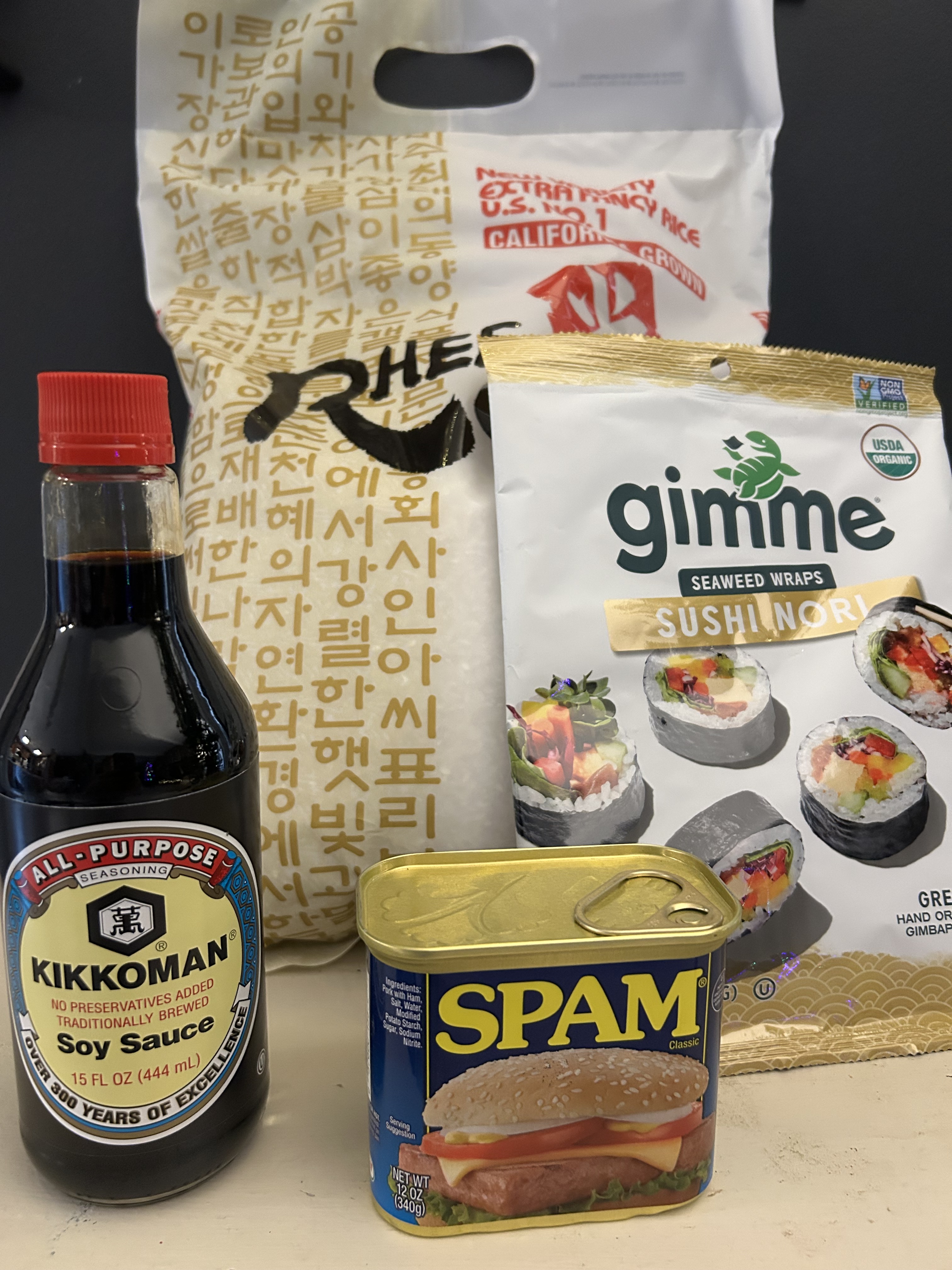
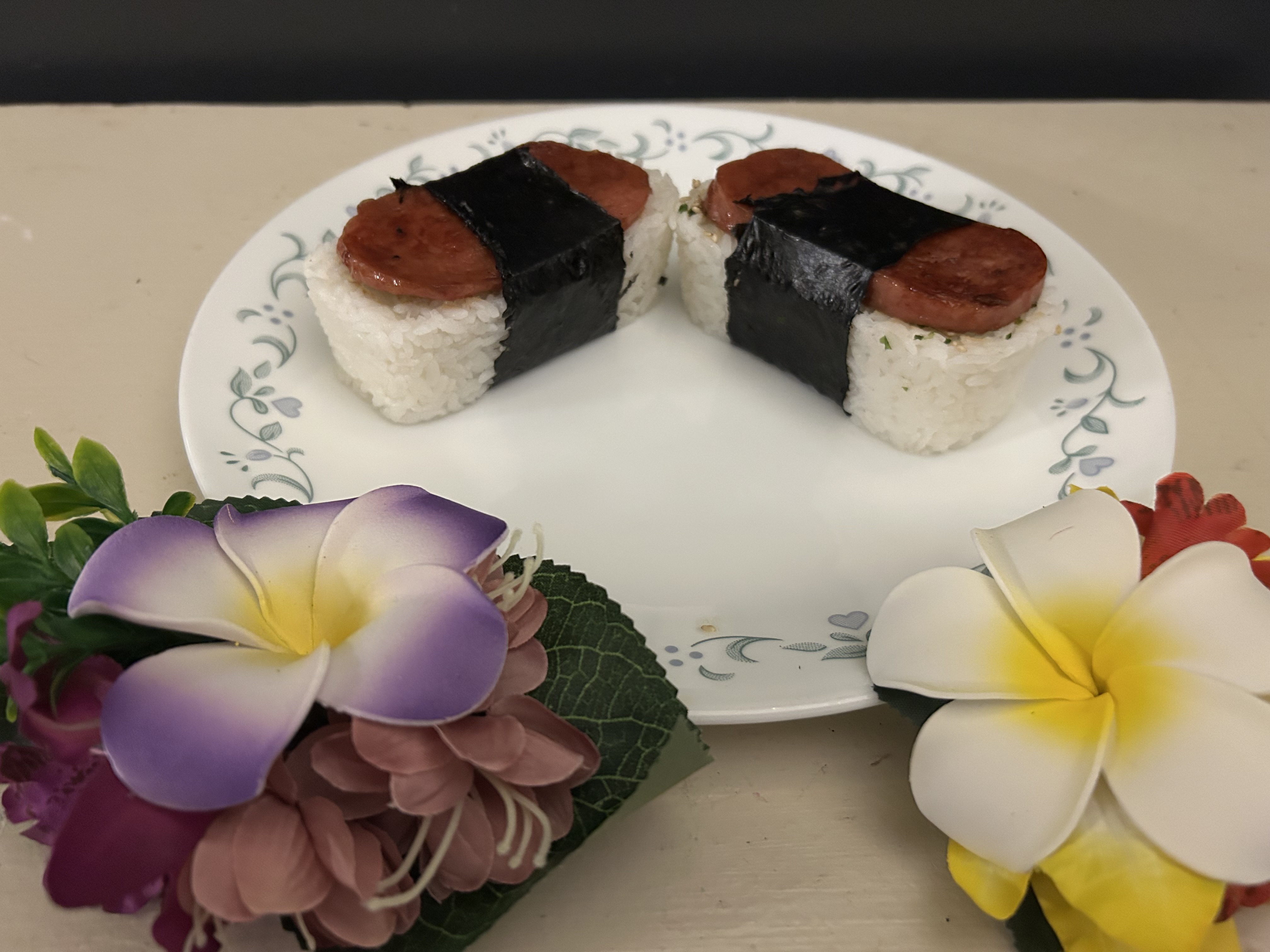
Get yourself some good medium-short grain rice. Learn how to cook it right (check out Ai Jiang’s directions), fry up some Spam (check out Angela Yuriko Smith’s directions), and form the rice into blocks with a slice of Spam on top, fold a bit of seaweed (precut into strips) around it and bam, you have your musubi. You can also choose to fry the Spam with a bit of soy sauce and sugar glaze (like I did). Furikake seasoning is optional… I don’t usually use it, but I did for one of the musubi.

Ok, if you must have a link, I found this one which might be helpful for anyone trying out this recipe for the first time: https://www.bonappetit.com/story/spam-musubi

Delicious Horror: Ai Jiang

Welcome back to Delicious Horror: Silk & Sinew edition! I can’t believe I only have two posts left. Today, I’m joined by the one and only Ai Jiang. I adore Ai’s writing — her prose makes my brain smile, which is a weird description, but that’s what reading her writing feels like! Her story in Silk & Sinew plays with second person point-of-view, which is one of my favorites to both read and write. Let’s find out more, and be sure to tune in next Wednesday for the final post!

Ai Jiang is a Chinese-Canadian writer, Ignyte, Bram Stoker, and Nebula Award winner, and Hugo, Astounding, Locus, Aurora, and BFSA Award finalist from Changle, Fujian currently residing in Toronto, Ontario. She is the recipient of Odyssey Workshop’s 2022 Fresh Voices Scholarship and the author of A Palace Near the Wind, Linghun, and I AM AI. Find her at www.aijiang.ca 

“The Heaven That Tastes Like Hell” 

My father is the inspiration behind this story as he comes from a village who placed sons on pedestals and during a time when sons were depended on for the livelihood of their entire family. 

I chose something very simple yet crucial growing up, not only for me but for my family as a whole—rice, as it is the staple of almost all our meals, just like the way my father had grown up needing to be the one who created the foundation of our home. 

https://www.hungryhuy.com/how-to-cook-rice-in-a-rice-cooker/

Delicious Horror: Angela Yuriko Smith

Welcome back to Delicious Horror: Silk & Sinew edition! Today, we’re chatting with Angela Yuriko Smith, current president of the HWA, which is no small feat! Let’s dive in and learn more about Angela’s powerful story and chosen recipe.

Angela Yuriko Smith, third-generation Ryukyuan-American poet, author, and publisher of Space and Time, seeks to transform our world through flywheel publishing fueled by radical generosity. A two-time Bram Stoker Award® winner and HWA President, she empowers authors, artists, and coaches to publish with intention at the Authortunities Hub, authortunitieshub.com

“Neither Feathers nor Fin”

My story follows a young girl named Miya as she navigates the aftermath of her family’s death during the battle of Okinawa. Miya’s father, following the Emperor’s command, used his only grenade to kill his family and himself rather than face capture by “the enemy” or “foreigners.”

After losing everything, in the end Miya realizes that even in the darkest of times, there is hope and the possibility of rebuilding. The story emphasizes the importance of human connection and the strength found in community.

I was originally going to make Sata andagi, a classic Okinawan confection similar in appearance to a round donut hole. The name comes from the Okinawan words for “sugar” (sata) and “deep-fried” (andagi), reflecting their simplicity as a comfort sweet. Then I remembered that cooking doesn’t involve being at my computer or writing so I abandoned the idea. Instead, I made fried Spam, which actually ties to my story better.

Spam’s popularity in Okinawa can be traced back to historical and cultural factors dating from World War II. After the war, U.S. military bases were established on the islands, bringing American canned goods, including Spam, into everyday life. Faced with shortages and limited fresh ingredients, Okinawans found Spam to be a valuable, shelf-stable source of protein.

Over time, Spam became woven into the local cuisine. Its salty, savory flavor complemented traditional Okinawan dishes like champuru stir-fries and paired well with rice-based staples. Families adapted recipes to include Spam, transforming an imported convenience food into something both familiar and comforting. This fusion of practicality, cultural exchange, and culinary creativity ultimately turned Spam into a beloved and iconic part of Okinawa’s food culture.

Fried Spam ala WWII

Required:

One can of Spam, unopened but with the opener attached

A flat stone or scrap of metal, if available

Hot embers or a small fire

Instructions:

Carefully open the Spam using its attached key or opener, saving every drop of liquid.

Slice off a piece with a clean blade or a sharpened stick.

Place the slice on a heated stone or scrap of metal set over your small fire’s embers.

Cook until its edges brown, then flip to brown the other side.

Eat straight away—salty and hot—letting it fill your empty belly as you crouch quietly under the night sky filled with gratitude.

Delicious Horror: Jess Cho

Welcome back! We’re getting down to the final four interviews with authors from Silk & Sinew! Today, I’m thrilled to learn more about Jess Cho and their story in the anthology. I’ve read some of Jess’s excellent poetry before (Happy National Poetry Month, by the way!), and I loved how that sharp poeticism comes through in the rich descriptions found in “Fed By Earth, Slaked By Salt.” Read more below!

Jess Cho is a Rhysling Award winning SFF writer of short fiction and poetry. Born in Korea, they currently live in New England, where they balance their aversion to cold with the inability to live anywhere without snow. Previous works can be found at Fantasy Magazine, khōréō, Fireside Fiction, Apparition Lit, Anathema Spec, and elsewhere. They blog infrequently at semiwellversed.wordpress.com 

“Fed By Earth, Slaked By Salt”

I wrote my story to the theme of estuary, which is a setting I’ve long been fascinated by. As the point where fresh and saltwater biomes meet to form a new, unique environment, I knew immediately that this was the perfect connection to dig into for an Asian Diaspora anthology, drawing from my own struggles to navigate my way between two identities. Add in folk-horror with a focus on body as land? Even better.

This story went through about a dozen iterations before I finally nailed it down to what appears in S&S, but several of the themes stayed true throughout—homecoming, the trauma of uprooting, the corruption of old rituals and the things we inherit whether we like it or not. I really wanted to lean into the more visceral senses like scent, texture and taste, and spent many hours squashing through the mud of my own local marshes while thinking about how to bring this story to life.

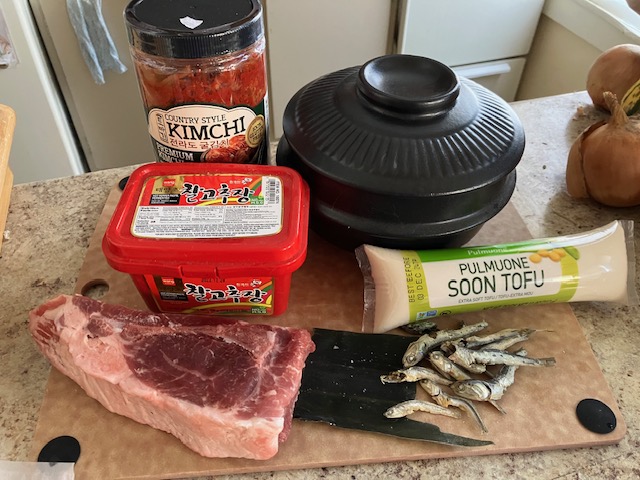
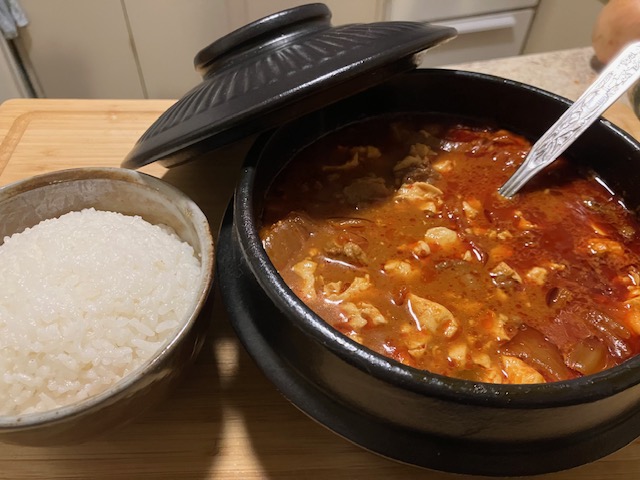
Food and taste both feature pretty prominently in my story, which made it tricky to narrow it down to one thing. I’d originally considered making samgyetang, the chicken and ginseng soup eaten in the story, but the more I thought about it, the more the themes I was going for were embodied by a different dish and I decided to go with sundubu jjigae, a soft tofu and kimchi stew.

Much like an estuary, sundubu jjigae is a meeting place of flavours, combining a briny broth made from dried whole fishes (which were actually what drove the sensation of biting into tiny fish skeletons in the story’s dream/mud scene) with the earthy richness of pork. Soft, uncurdled tofu gives it the best slippery-weird silt texture and then whole thing is tied together with kimchi. This is also one of the very first Korean dishes I learned how to make and remains one of my favourite comfort foods. Warm and spicy and gorgeously red, it’s everything I want when I think of a homey meal. I tend to measure this one more with the heart than the hands, but the recipe below is more or less what I’ve cobbled together from a variety of different ones I’ve tried over the years. If you want a less haphazard resource for Korean recipes, https://www.maangchi.com/ is an excellent place to start.

Sundubu Jjigae

  • 4 cups water
  • 8-10 medium dried anchovies (you can use ones with the head and guts removed but I like them left in—they add a little bitterness)
  • 1 roughly palm sized piece of dried kelp
  • 1 package sundubu, extra soft tofu (silken works in a pinch, but it’s not the same)
  • 5oz pork, cut into small pieces (any kind works, I prefer fatty over lean)
  • ⅔ cup chopped kimchi
  • 1 tbsp gochujang
  • Garlic
  • 1 tbsp oil
  • Soy sauce to taste
  • Egg (optional)
  • Green onion (optional)
  1. Add water, dried anchovies and kelp to a pot and bring to a boil over high heat. Reduce heat and cover, let simmer for 20 minutes. Remove from heat, strain and reserve the liquid.
  2. In a separate pot (a ttukbaegi is ideal if you have one) on medium-high heat, add oil and garlic, stir until fragrant. Add gochujang and pork, cook for another three minutes while stirring. Add kimchi, cook for another few minutes until everything is nicely incorporated.
  3. Stir in broth until soup-like, leaving enough space in the pot for the tofu later. Cover and let simmer for anywhere from 20-40 minutes, depending on how tender you like your pork. Add more broth as needed.
  4. Add the sundubu, breaking it up with a spoon. Cover again and let it simmer until everything is heated through. Taste, add soy sauce or fish sauce as desired.
  5. (Optional) If using a ttukbaegi, remove from heat, crack an egg in and place the lid back on before serving. The heat from the stone will continue to cook the egg until ready to eat. If using a regular pot, add egg and cover but continue to heat until the egg has set.
  6. Garnish with sliced green onion if desired. Serve with white rice and banchan of your choice.

Delicious Horror: Priya Sridhar

Welcome back to the Silk & Sinew edition of Delicious Horror! I’m making my way through Silk & Sinew (which is an absolute delight, by the way), and Priya’s story is so wonderfully rich in its descriptions!

A 2016 MBA graduate and published author, Priya Sridhar has been writing fantasy and science fiction for fifteen years, and counting. Capstone published the Powered series. Priya lives in Miami, Florida with her family. Find Priya on Mediumher website, and Patreon!

Priya notes: “The recipe enclosed will also go on my Patreon, and it would be great if readers could subscribe for more creative baked goods once a month.” 

“Mohini’s Wrath”

The inspiration — after being given the Air prompt.

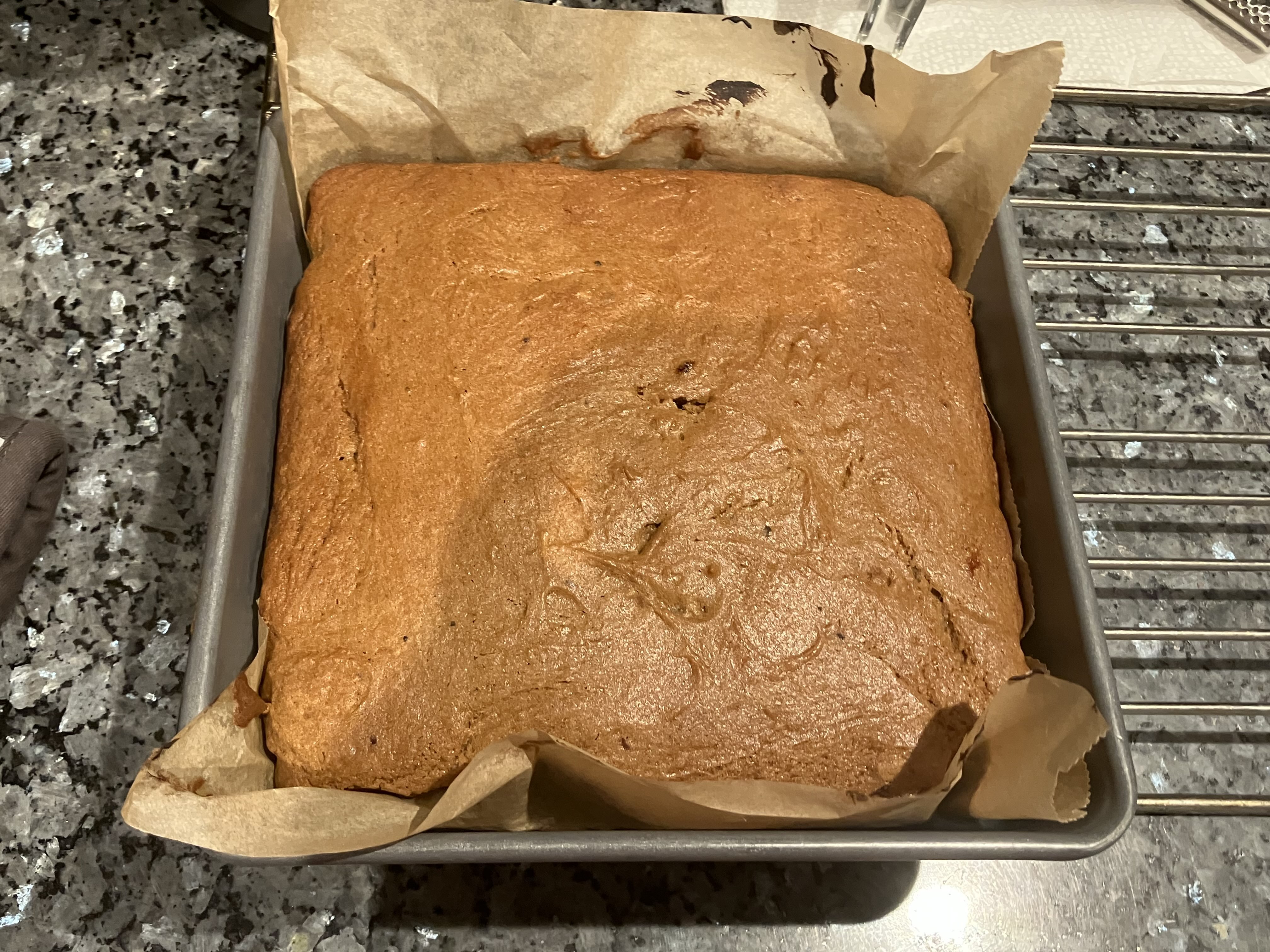
I made chai gingerbread. The main conflict of the story is how a god haunts the main character and slowly steals her breath. When I feel sick, for some reason tea that my family makes helps me feel better. That and it’s the winter holidays, so I wanted to make something that would also fit in with the spirit of cold weather and meaningful joy.

It’s enclosed below! Special thanks to Meaningful Eats for providing the source recipe.

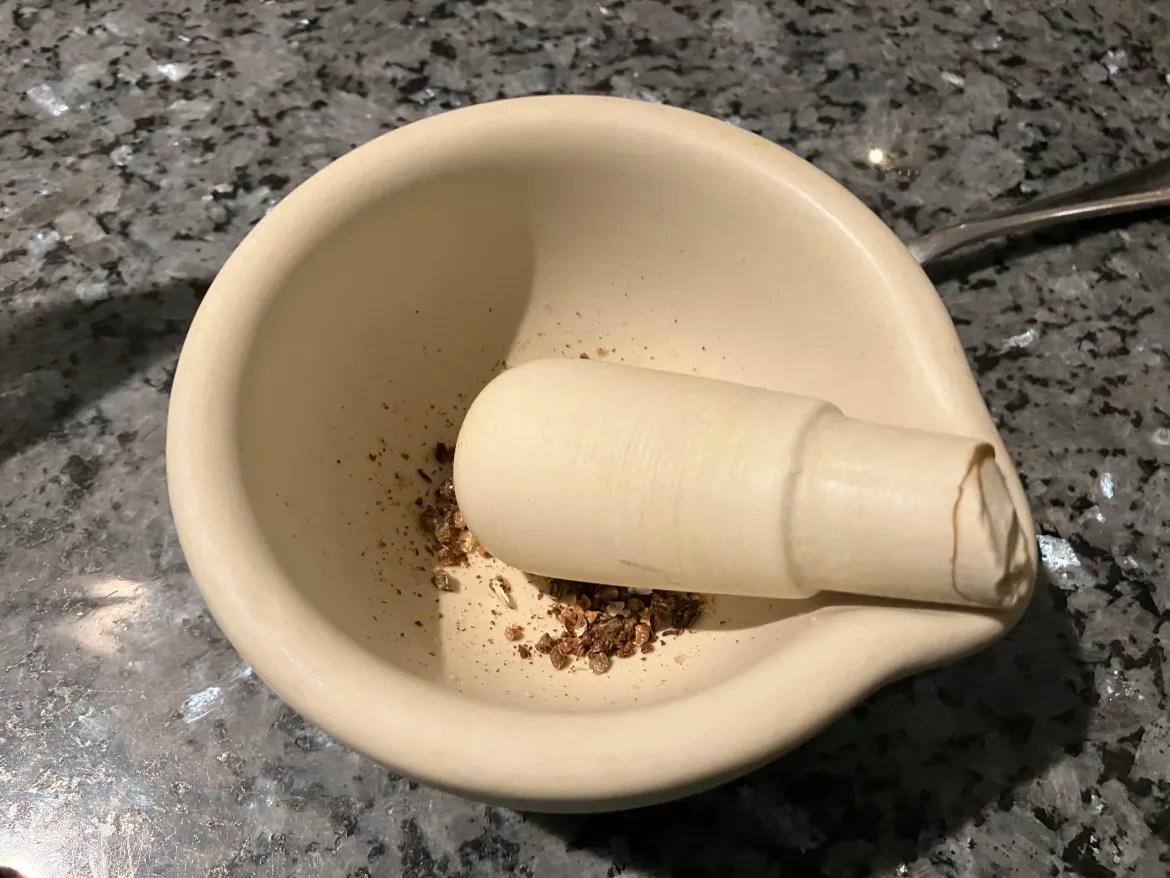
Notes: Do not try and grind the cardamom by hand. I learned this the hard way. 

Chai gingerbread

1/2 stick butter 

1 1/2 cups sugar

2 eggs

1 lemon

1/2 cup molasses

1 ginger root about two inches long, grated

1 cup steeped boiling chai (you can use a chai leaf blend like I did, bags, or Celestial Seasonings’ Bengal Spice if you want to avoid caffeine)

1/2 teaspoon cardamom pods (5-6 cardamom pods)

1/2 teaspoon cloves

1/2 teaspoon nutmeg

Pinch of black pepper

1/2 teaspoon cinnamon

3/4 teaspoon salt

1 teaspoon baking powder

1/2 teaspoon baking soda

2 cups gluten-free 1:1 baking flour

1/2 cup rice flour

1. Preheat oven to 350 degrees and line a 9 by 9 inch square cake pan with parchment paper. Take out butter to soften at room temperature.

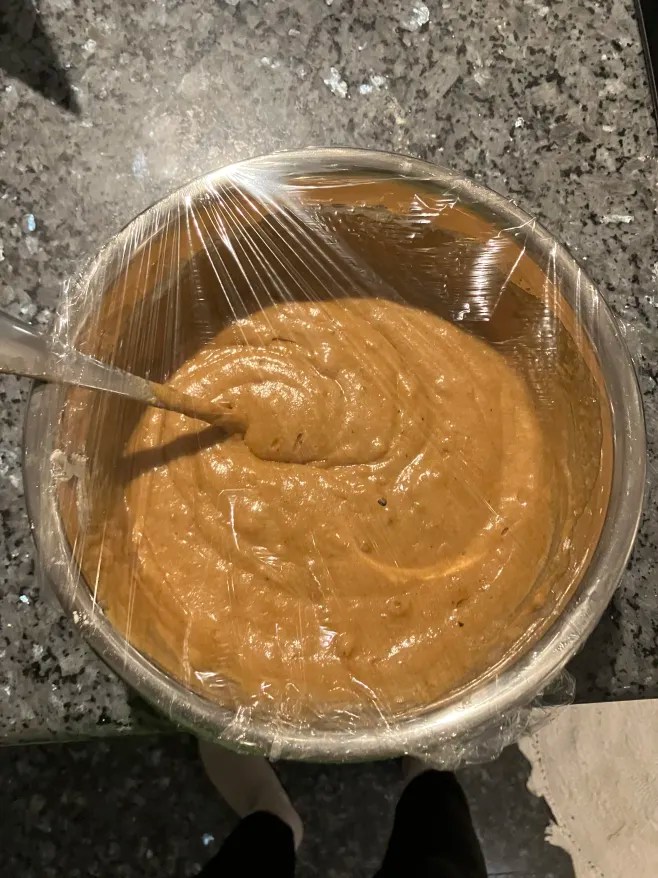
2. Cream butter with your sugar. Stir in your eggs.

3. Squeeze lemon into the wet ingredients. Add your molasses and grate in your ginger.

4. Using a mortar and pestle, open your cardamom pods and empty them into the bowl. Grind them with your cloves in a spice grinder.

5. Combine your ground cloves and cardamom with cinnamon, nutmeg, and black pepper. Mix with your flour, baking soda, baking powder, and salt. 

6. Alternate adding your hot tea with the dry mixture to your wet ingredients, dividing each into three parts. Start with adding your flour, and finish with tea. Stir thoroughly and beat out lumps.

7. Pour into your prepared pan. Bake for 50-55 minutes or until a fork inserted in the center of the cake comes out clean.

8. Allow to cool for at least five minutes before serving. 

Delicious Horror: Seoung Kim

Happy Wednesday and welcome back to Delicious Horror: Silk & Sinew edition! Today, we’re chatting with Seoung Kim. Remember you can pre-order Silk & Sinew with a signed bookplate! Now, let’s learn more about the author and the story.

Seoung Kim is a Korean librarian who lives on the lands of the Council of the Three Fires near Chicago. He loves reading and writing stories with queer Asian protagonists as well as vampires, ghosts, et al. They have work in Podcastle, Strange Horizons, and elsewhere. Seoung is also working on putting together a Kickstarter for an Asian post-cyberpunk anthology, with a plan to launch in March and take submissions after funding. More details are listed at seoungkim.com.

“The Fox Daughter Comes To Glenview”

The story is about a woman who discovers her husband has another family in Korea, and she ends up having to take care of his daughter from his other marriage. The daughter behaves in some off-putting – perhaps inhuman? – ways.

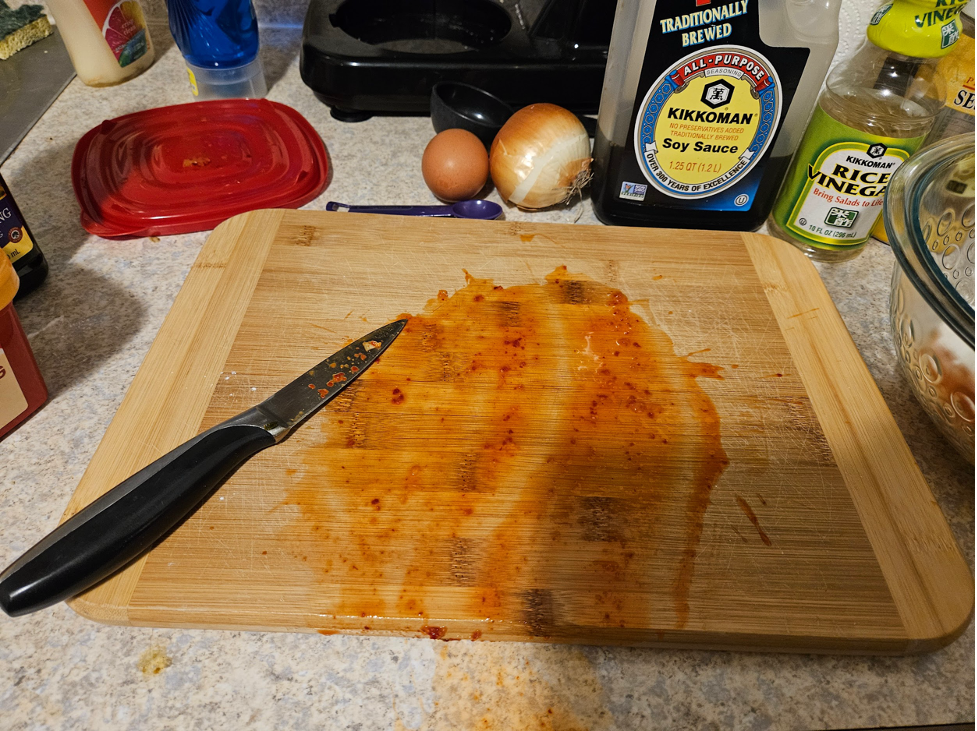
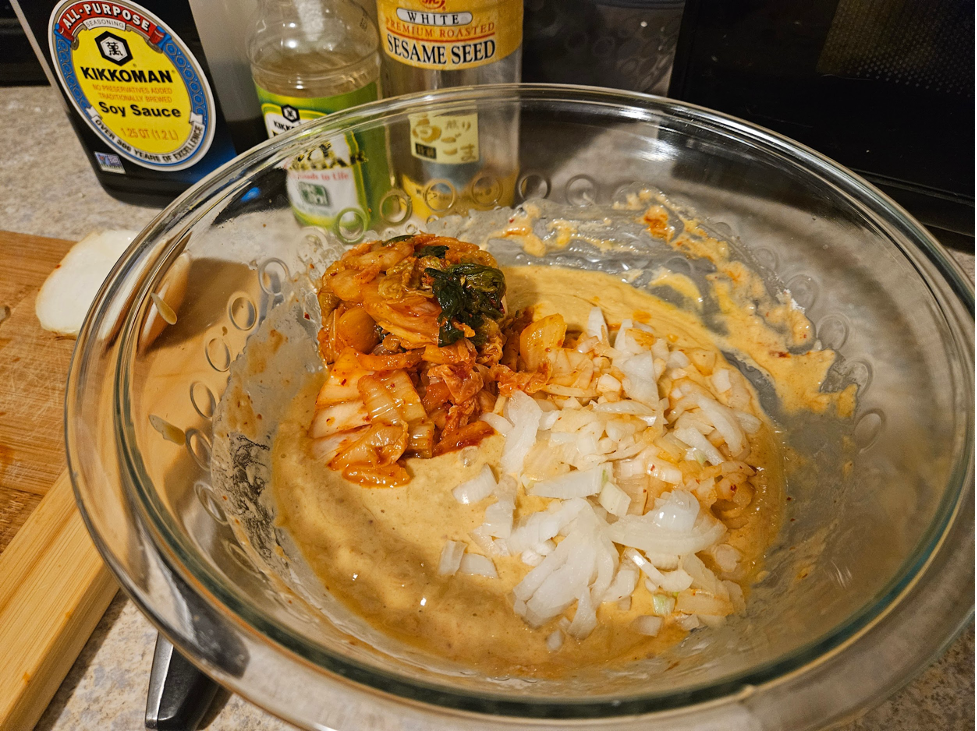
I’ve chosen kimchijeon from the scene where the family eats lunch in the church basement and all the church ladies are judging the main character. This is a classic Korean church lunch: pajeon, kimchi, and rice, with a side of gossip.

Recipe: https://www.koreanbapsang.com/kimchi-jeon-kimchi-pancake/

I love Korean Bapsang, she’s my go-to for Korean recipes.

Delicious Horror: Lee Murray

Welcome back to Delicious Horror: Silk & Sinew edition! Today, we’re chatting with the always wonderful and fabulous, Lee Murray! Lee is not only an incredibly kind human, but an immensely talented writer. Every piece I’ve read of hers is a captivating work of art.

Also, remember you can pre-order Silk & Sinew with a signed bookplate.

Lee Murray is a writer, editor, poet, and screenwriter from Aotearoa New Zealand, a Shirley Jackson Award and five-time Bram Stoker Award® winner. A USA Today bestselling author with more than forty titles to her credit, including novels, collections, anthologies, nonfiction, poetry, and several books for children, she holds a New Zealand Prime Minister’s Award for Literary Achievement in Fiction, the first author of Asian descent to achieve this, and is an Honorary Literary Fellow of the New Zealand Society of Authors. Her latest work, NZSA Cuba Press Prize-winner Fox Spirit on a Distant Cloud, was released in 2024 from The Cuba Press. Read more at leemurray.info

“The Poppy Cloud” short story

“Charcoal Skies” poem

Kindly invited to consider the theme of air as it applies to Asian diaspora folk horror, I was drawn to the concept of our bodies becoming the expression our ancestral lands, the heritage we carry with us wherever we might be, conjuring a story which considers how Chinese women lost their voices, and their agency, as a result of New Zealand’s historic anti-Chinese policies. Based loosely on the Māori legend of Kuirau, with insight into opium addiction, “The Poppy Cloud” blends horror and magical realism. Here is the premise:

When Second Wife arrives in Aotearoa-New Zealand in 1908, a full twelve years after her husband, there is a tax to pay, but already the fare has impoverished her husband. To enter the country, Second Wife must give up her lungs. She fashions a new organ from a battered opium pipe, but the tubes are thin and rigid, making every breath an agony. Second Wife can barely survive on the gasps of poisoned air, let alone speak, not that anyone understands her foreign tongue. But her bitter husband, seeing a way to recoup his losses, opens an illicit opium den in a dingy back room, hiring her out to soporific men who further suck her life breath from her. Isolated and abused, Second Wife’s only escape is into her dreams. But soon the town’s Temperance Women discover the enterprise—illegal since the Opium Prohibition Act 1906—and set out to purge the people of the Peril.

Likewise, “Charcoal Skies”, which also appears in the anthology, is an ‘air’ poem. A terzanelle, it considers the alchemy of gunpowder, an invention commissioned by Emperor Wu and intended as an elixir of eternal life. Instead, the explosions stole the oxygen, the life-breath, from Chinese people even as they built roads and bridges to new lives in foreign lands. Here is an excerpt:

our voices stolen; our lungs scorched to dust

foul corpses laid in monuments of blood

breath after breath after breath after breath

building iron roads across hostile lands

“The Poppy Cloud” connects to the legend of Kuirau, a beautiful Māori maiden who lived in Rotorua in the Bay of Plenty, a town not far from where I live. As the legend states, Kuirau, was bathing in the tepid waters of a local lake – then called Taokahu – when a water serpent-monster, a taniwha, grabbed her and pulled her into his watery lair at the bottom of the lake. But Māori gods witnessed the kidnapping and, angered by the audacity of the monster, caused the lake to boil, destroying both the bold taniwha and also the innocent maiden. Today, a park named after Kuirau exists on the same spot at the centre of the city, where the boiling pools and streams still bubble with mud and emit sulphurous steam.

Grace Bridges’ images used with kind permission from the author. You can follow her steam cooking vlog here: gracebridges.kiwi

These geothermal pools are an important part of Māori culture, their daily life and their storytelling, as the New Zealand Geothermal Association States:

“For centuries, Māori have recognised and utilised naturally sourced geothermal (waiwhatu) energy for various purposes. They consider these areas as sources of healing, sustenance, and power and traditionally use thermal fluid for bathing and treating various ailments.

Additionally, geothermal (waiwhatu) resources played a vital role in traditional Māori cooking practices. Steam vents, hot springs and heated soils were used for cooking, particularly for the preparation of “hangi” meals. A hangi involves cooking food in an earth oven, utilising geothermal (waiwhatu) steam and heat to impart unique flavours to the food.

Geothermal (waiwhatu) sites and resources also hold cultural and spiritual significance for Māori. They are considered as meeting places between the physical and spiritual worlds, and ancestral stories and legends often connect these areas to the creation and history of Māori people.”

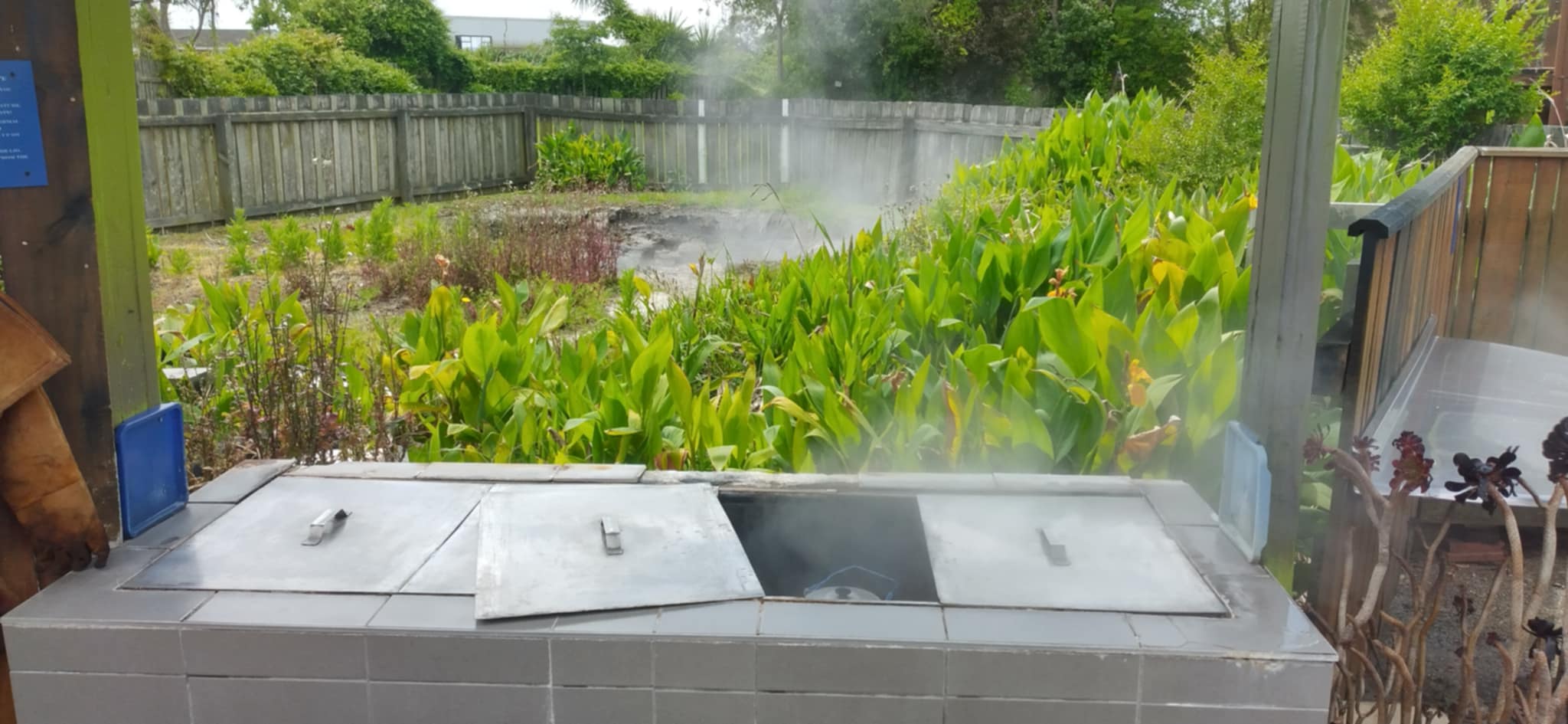
“Meeting places for spiritual and physical worlds…” Isn’t that the very definition of folk horror? But it’s the second paragraph above that has prompted my ‘recipe’ or rather the ‘process’ of using steam to nourish and sustain us, a practice still used by locals to this day. In fact, my friend, speculative writer Grace Bridges, lives just steps from Kuirau Park, and she cooks all her meals, every single one (yes, even her breakfast), in an outdoor steam oven fuelled by the same source that boiled the legendary taniwha. On several occasions, I have visited Grace for weekends and enjoyed fabulous meals cooked in this steam oven.

Here is an image of the steam oven, including the geothermal pool behind it:

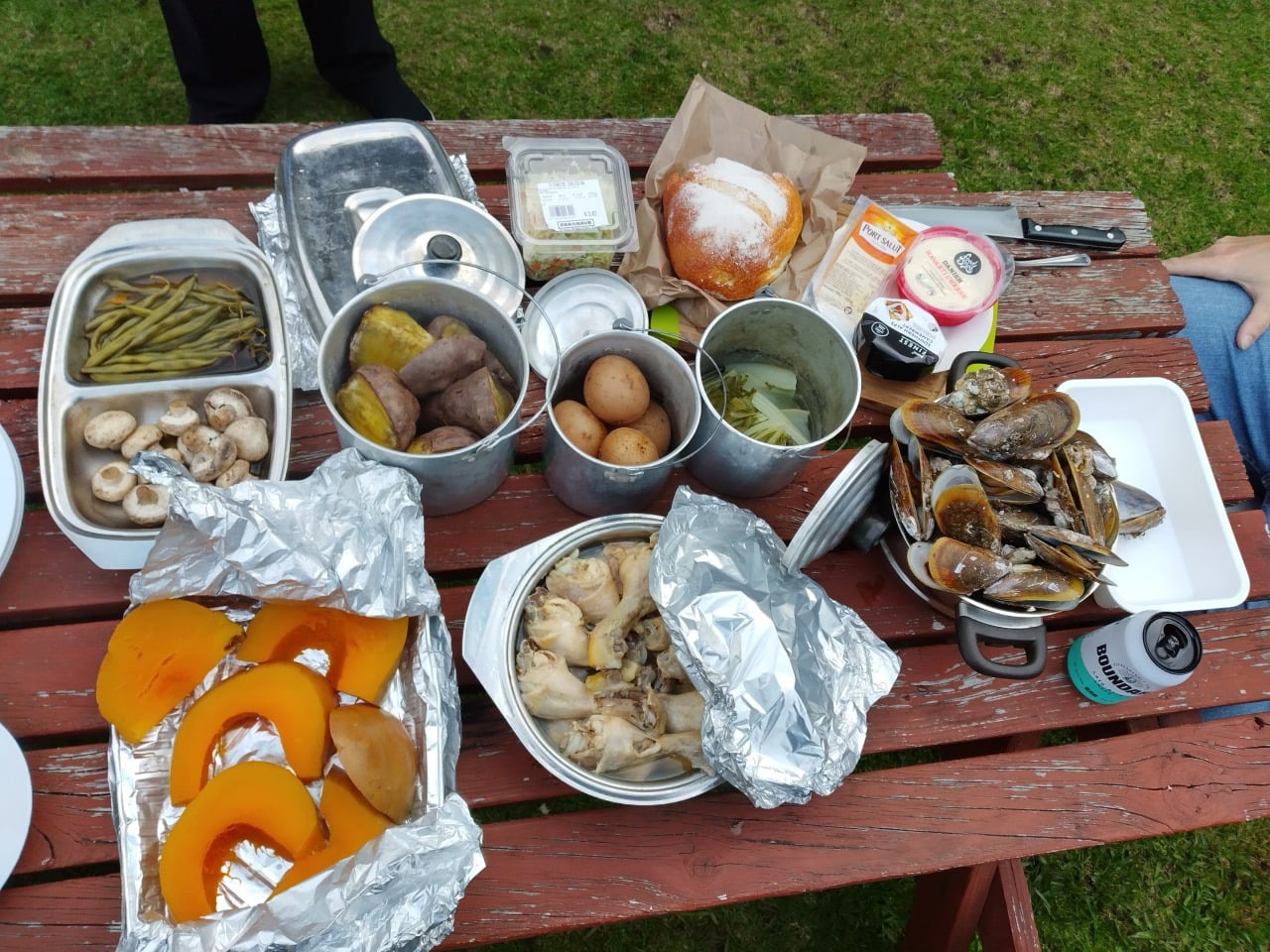
And here are some typical foods cooked in the steam oven, including local staples like sweet potato (kumara) and green lip mussels (kuku):

Of course, traditionally, Māori didn’t have metal billies in which to cook their food, instead lowering the food into the boiling pools in flax baskets or wrapping the food in leaves in the case of the earth oven.

I absolutely love this connection between my story and this lifegiving natural source used for centuries by the indigenous people of my country. And of course, steam is a key cooking technique in Chinese cuisine too, with dumplings and delicacies typically steamed in bamboo containers and served straight to the table at yum cha.

Notes:

Links: https://www.nzgeothermal.org.nz/geothermal-in-nz/maori–geothermal/

Delicious Horror: Rowan Cardosa

Welcome back to Delicious Horror! I’m creating this post right after reading Rowan’s story in Silk & Sinew, and oooh if you love body horror (which is my favorite horror sub-genre), you are going to love, love, love this story as much as I did. Also, this is their debut story?! Okay publishers and editors, I’m going to need you to invite Rowan to more anthologies ASAP.

Rowan Cardosa is a Filipino-American writer who currently lives in north Texas. “In Twain”, appearing in Silk & Sinew, is their debut story, but they also write articles on video games and pop culture. They’ve also created their own TTRPG, Wolfspider Academy, which is currently available on itch.io.

Rowan’s interests outside of literature include video games, gardening, and tabletop role-playing games. While they’re interested in a lot of genres, fantasy and horror are their main obsessions, as well as anything related to history and mythology. They currently live with their elderly dog and more Pokemon plushies than anyone has the right to own.

“In Twain”

The manananggal was one of the first mythical creatures I learned about from my mother. Body horror has always been a fixation of mine ever since I was a kid, so I wanted to work in a transformation story with a manananggal as the central focus. “In Twain” combines that with my own lived experience as a biracial person whose connection to their cultural heritage is a source of insecurity and identity issues. The main character is different from me in a lot of respects, but we both have that going for us.

The main character is biracial and has some identity issues regarding her family having assimilated into mainstream/white American culture. That wasn’t at the forefront of my mind when I made a more Americanized version of a Filipino dish, but I guess my subconscious won out. I also wanted to use pork since it’s supposedly the most similar to human flesh.

Pineapple Braised Pork

I wanted to make a dish with pork since, according to cannibals, it’s the closest meat to human flesh. My first thought was to make a recipe for a more traditional humba, but I ran into complications (and no small amount of frustration) when the local 99 Ranch didn’t have black bean paste. This is a more Americanized take that is very loosely based off the original, and uses ingredients you can find at just about any grocery store.

  • Prep time: About 10-15 minutes
  • Marinade: 6-8 hours
  • Cook: 60-90 minutes
  • Makes 4-6 servings

You’ll need:

  • 1 pound pork, diced (You should use the belly or another fatty cut)
  • 1 thumb-sized piece of ginger, peeled and cut into slivers
  • At least 5 cloves of garlic, minced
  • 2 tablespoons oil
  • 2 large onions, cut into chunks
  • 1 bell pepper, diced
  • 1 20-oz. can of pineapple tidbits, with the juice drained and set aside
  • About 5-7 bay leaves
  • ½ cup soy sauce
  • ¼ cup vinegar
  • 1 cup apple or pineapple juice
  • ½ cup packed brown sugar
  • 1 tablespoon fish sauce or Worcestershire sauce
  • MSG to taste
  • Black pepper to taste (use whole peppercorns if possible)

For the marinade:

  • 1 cup pineapple juice
  • 1 ½ cup apple juice, apple cider, Dr. Pepper, or cola
  • ¼ cup soy sauce

Instructions:

  1. Marinate your meat. In a non-reactive container, combine 1 cup pineapple juice, 1 ½ cups of your other juice or soda, and ¼ cup soy sauce. Add the diced pork, cover the container, and let it sit in your fridge for 6-8 hours or overnight.
  2. Create your braising liquid. In a small to medium-sized bowl, combine the remaining soy sauce, fruit juice, fish sauce (or Worcestershire sauce), and vinegar. Set this liquid aside for later.
  3. Sweat your aromatics. Heat oil in a medium pot over medium-high heat. Add onions, garlic, bay leaves, black pepper, and ginger. Cook until onions are soft and translucent.
  4. Brown the meat. Drain the marinade off your diced pork and add the meat to the pot. Sear the pork on medium-high heat until golden brown.
  5. Add your braising liquid. Pour the combined liquid ingredients into your pot and deglaze. Add brown sugar and MSG, stirring until the sugar is dissolved.
  6. Cook over high heat for about 15-20 minutes, stirring occasionally.
  7. Add bell peppers and pineapple pieces.
  8. Partially cover the pot and let simmer over a low heat for an additional 25-30 minutes, stirring occasionally.
  9. Turn off your heat. Serve braised pork over a bed of steamed rice.