Welcome back to the final post in the Silk & Sinew edition of Delicious Horror! My last guest is none other than the editor of Silk & Sinew, my dear and brilliant friend, Kristy Park Kulski! Thank you so much to Kristy and all of the authors who contributed such insightful and inspiring posts, and so many delicious recipes to try! I can’t recommend the anthology enough — order your copy today!
KRISTY PARK KULSKI is a Hawaii-born Korean-American author, historian, and career vampire of patriarchal tears. Channeling a lifelong obsession with history and the morose she’s managed to birth the gothic horror novel, Fairest Flesh, and novella, House of Pungsu. She bartered nine years of her life to the U.S. Navy and Air Force for food and later taught college history for a captive audience. Trapped by a force field, she currently resides in the woods of Northeast Ohio where she (probably) brews potions and talks to ghosts. Follow her on Bluesky @garnetonwinter or garnetonwinter.com.

Editor of SILK & SINEW and author of the short segment found in the anthology, “Glimpses into the Historical Context”
Tell us a bit about the inspiration behind Silk & Sinew:
This anthology grew from a lack of representation for the Asian diaspora, from being seen as a perpetual foreigner, and how we are often erased from histories of the areas we live… yet here we are contributing and weaving the very the fabric of these regions. Further, we have far reaching histories of our own. Diasporas create their own unique cultures that are often a blend of many influences.

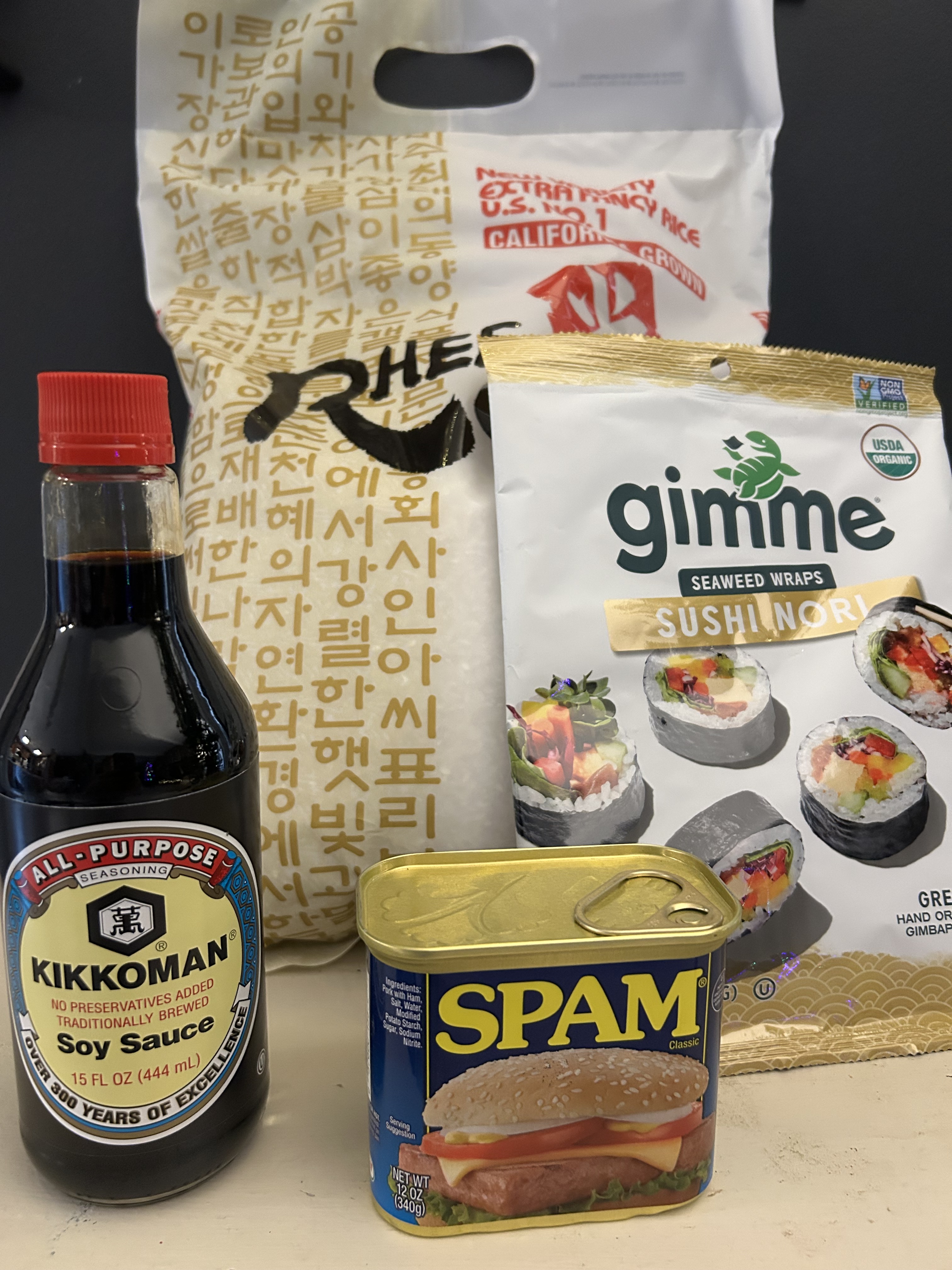
What did you decide to make to pair with the anthology, and what inspired your delicious food or drink?
I decided to pair a common food found in Hawaii: musubi. To me, it’s the epitome of how the Asian diaspora has blended and created something new and unique to itself, while simultaneously rooted in the history of war and colonialism. It’s a humble food with humble origins.
Colonial plantation owners imported labor during the 19th and 20th centuries, purposefully diversifying ethnic groups in an effort prevent unity. Japanese, Chinese, Filipino, Korean, and Portuguese laborers arrived and were forced to live and work in horrible conditions. During WWII, Spam, inexpensive, easily stored, and long lasting, the U.S. government not only feed the troops with it, but rationed it to populations in occupied regions, such as Japan, the Philippines, and South Korea. (It was also fed to Japanese-Americans in the interment camps.)
For Koreans, Spam is a significant part of our cuisine. Starving and struggling with the war-torn landscape after the Korean War, people came to rely on it as a source of protein. There’s a complex relationship of war, colonialism, and racist abuse tied up with Spam. But it’s also become a well-loved part of many cuisines, including Hawaii, likely making its way there via the U.S. military.
Musubi was born from Barbara Funamura, who is believed to have created the dish in the 1940s. I’ve also heard an origin story that links it to plantation workers, but that might have been just talk story i.e. gossip. Musubi is created from all these elements coming together in the face of adversity.
A few months ago, I went to a botanical garden which had a Hawaii themed greenhouse, which included an informational display of foods of Hawaii. I laughed when I saw a plastic model of musubi. Then I sort of reflected on how odd that this dish, universal in Hawaii would be presented as if in a museum. It would sort of be like having a plastic model of a grilled cheese sandwich. In Hawaii, musubi is easily found everywhere you need to grab quick to-go food, often in convenience stores. I miss that now living in the mainland. It’s also great to pack in work and school lunches, as my daughter can attest.
Hope you enjoy this simple recipe!

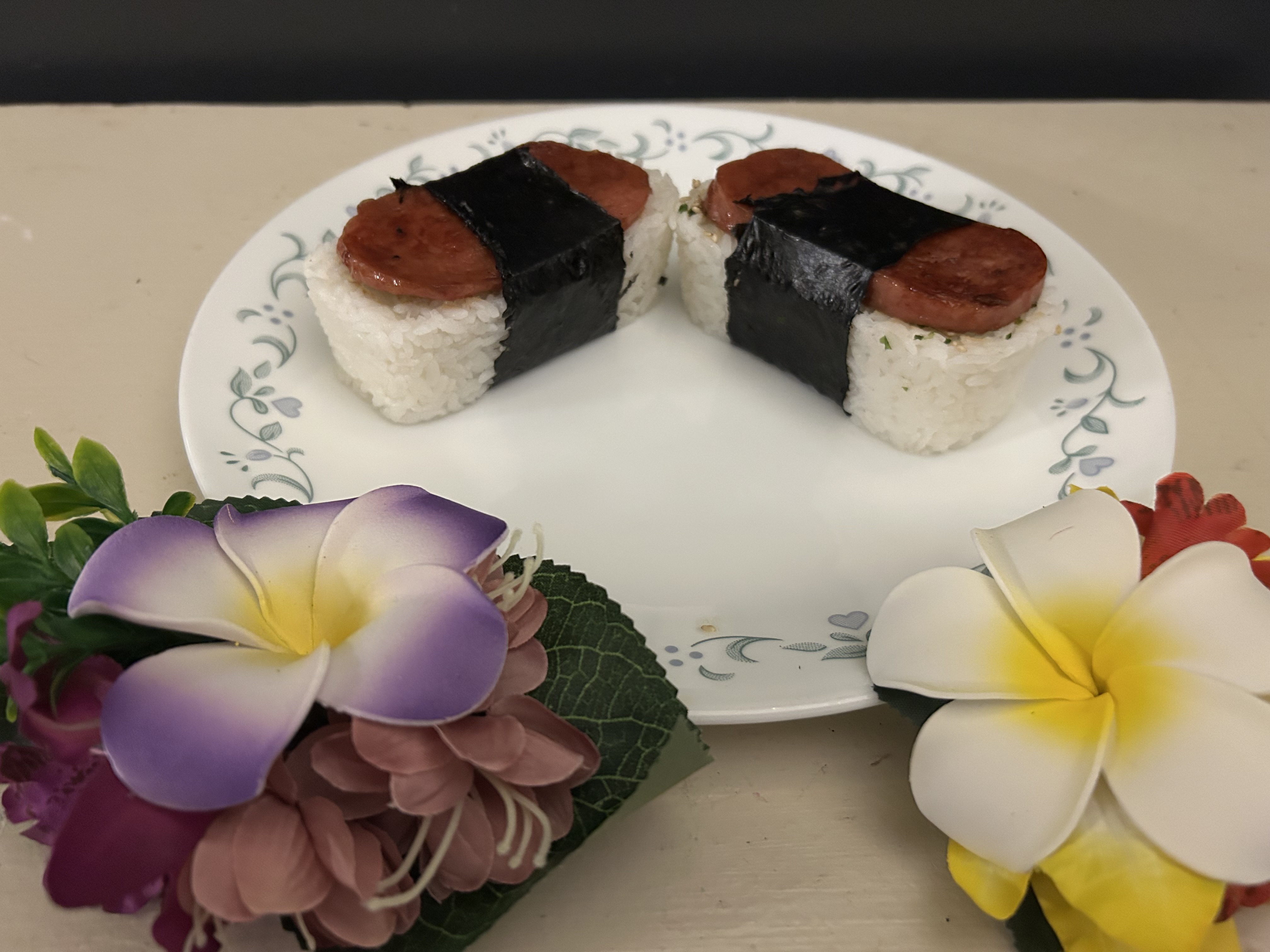
Can you share the recipe or a link to the recipe?
You don’t need a link!
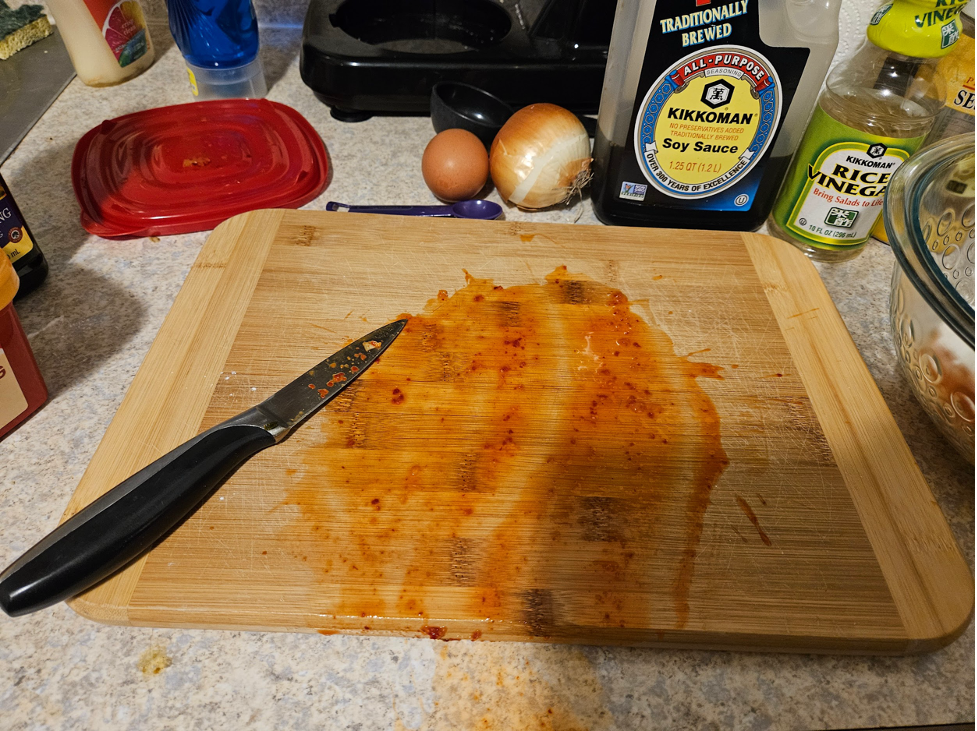
Get yourself some good medium-short grain rice. Learn how to cook it right (check out Ai Jiang’s directions), fry up some Spam (check out Angela Yuriko Smith’s directions), and form the rice into blocks with a slice of Spam on top, fold a bit of seaweed (precut into strips) around it and bam, you have your musubi. You can also choose to fry the Spam with a bit of soy sauce and sugar glaze (like I did). Furikake seasoning is optional… I don’t usually use it, but I did for one of the musubi.
Ok, if you must have a link, I found this one which might be helpful for anyone trying out this recipe for the first time: https://www.bonappetit.com/story/spam-musubi














 Sara Tantlinger