Today, I am joined by the fantastic Tanya Pell to discuss her upcoming novel, Her Wicked Roots, which will be out on October 7th! Since we both have forthcoming works inspired by Nathaniel Hawthorne’s story “Rappaccini’s Daughter”, I thought it would be fun to chat with Tanya and geek out over the Gothic. You can catch my Hawthorne-inspired novelette in my collection Cyanide Constellations, out on October 21st.
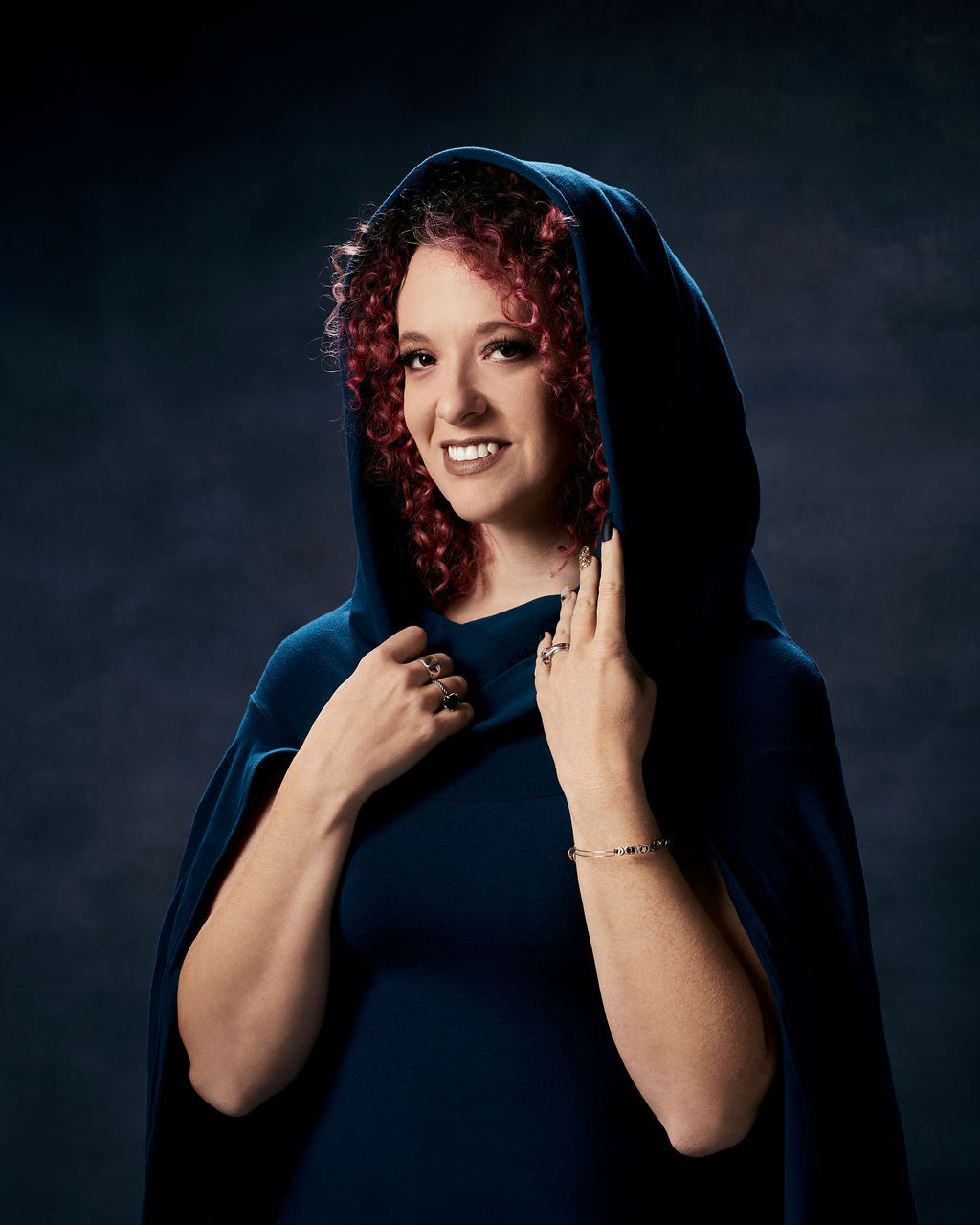
Tanya Pell is a narcoleptic horror author who drinks bougie coffee and lives in the American South. She is the author of Her Wicked Roots, Cicada, and several short stories featured in anthologies like Fever Dreams, Mother Knows Best and OBSOLESCENCE.
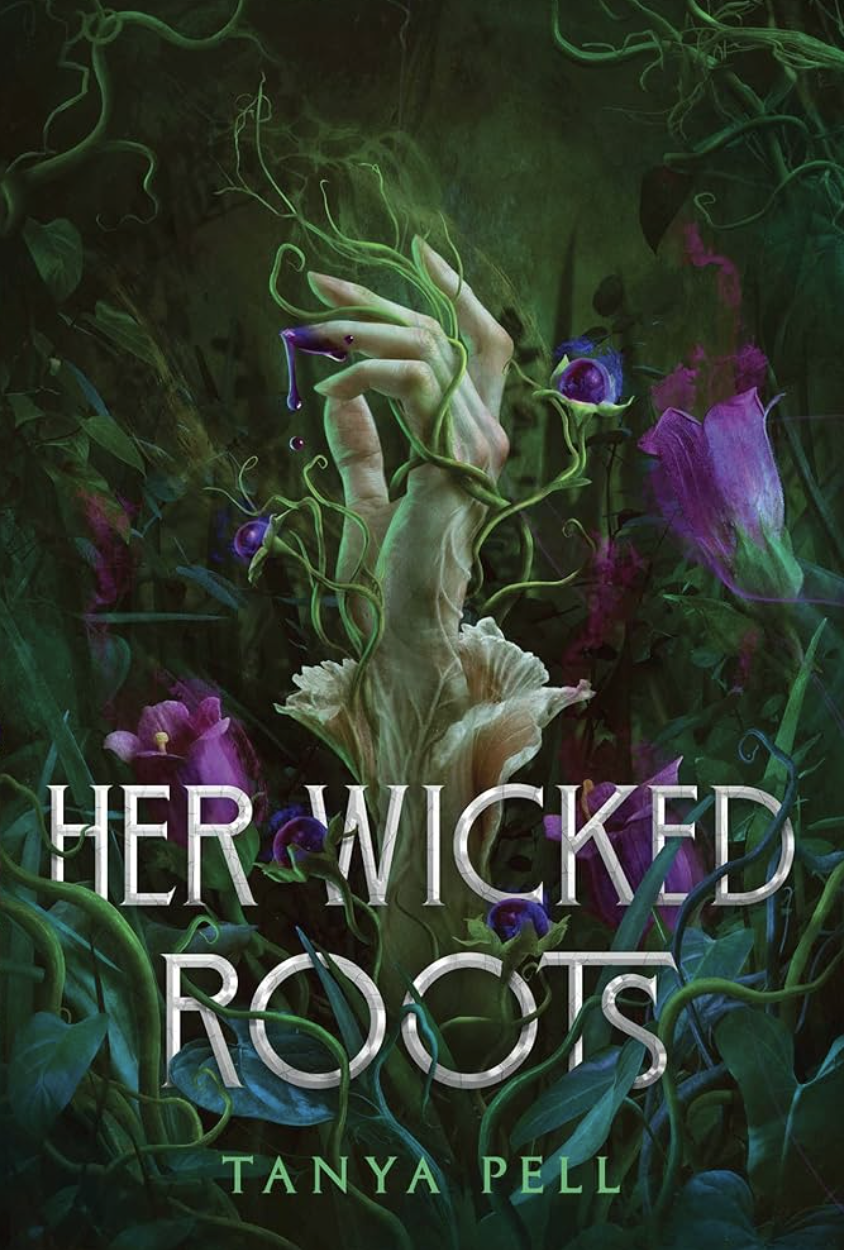
Sara Tantlinger: I am so excited to read Her Wicked Roots. So excited in fact that I almost pre-ordered it twice! That cover and the foiled edges look spectacular. What drew you to using “Rappaccini’s Daughter” as inspiration?
Tanya Pell: Thank you!!!! Yes, they definitely spoiled me with the sprayed/stenciled edges. I thought I might get lucky to get sprayed. Artists are magical. And I had always wanted to work with Marcela Bolivar (artist) so when they asked if I had any idea who I wanted for the cover artist I knew exactly who and she was kind enough to accept.
I used to teach “Rappaccini’s Daughter” in the before time as a HS teacher and it was part of my Gothic fiction unit. It’s one of my favorite short stories and scrolling through Twitter one day I saw someone ask why nobody had ever reimagined the story before and it was honestly one of those, “WHY NOT?!” moments. I think I had a full outline by end of business day? The characters were just sort of there. And I knew I wanted it to be a sister story as much as a lust story.
Sara Tantlinger: I love that! And what a fantastic story to have taught. Do you have any other favorite works by Nathaniel Hawthorne? “The Birth-Mark” is one I think about a lot. It has so many similar themes to “Rappaccini’s Daughter” in which a man thinks he knows better and tries to transform the woman in his life through chemicals and strange botany. But surprise, surprise, she dies. Yet, Hawthorne’s depiction of women’s suffering is often tender and sympathetic.
Tanya Pell: “The Birth-Mark” is one I think about a lot, too! This poor woman who submits to her husband’s experiments because he finds her less than perfect. Her one flaw becomes so irritating to her husband that she would literally rather die than cause him distress! I think it is interesting how Hawthorne is most known for these anti-patriarchal stories (most notably The Scarlet Letter) that show the women suffering socially, emotionally, and physically, and yet there is always this vein of misogyny running through them. You get a sense of him saying, “Oh, sure, the women are suffering and isn’t it upsetting, but look how sad the man is by it all! He feels terrible for his part in it and will do better.”
It is one of the reasons I wanted Her Wicked Roots to be a story featuring a mother rather than a father; who perverts her own Eden out of her loathing for the patriarchal system she was born into. I wanted the women to fight back rather than just be victims we empathize with. The problem, of course, is what that ends up looking like. So you have Hawthorne’s underbelly of “fight the patriarchy” with this house full of women, but they’re not exactly any better once you get in there.
Sara Tantlinger: Yes! It’s so interesting to me how Hawthorne gave us these female characters who seem so perfect to take things a step in directions he probably never would have dreamed of. That balance of what was progressive for his time versus what he was too deep in the patriarchal system to see is really intriguing to dissect.
I love that Her Wicked Roots is a queer retelling, too. In Hawthorne’s original story, Beatrice Rappaccini is very much the “other” and is seen as something both monstrous and alluring—the things that make her “forbidden” are also the traits that entice others toward her. I’d love to hear more about Her Wicked Roots and the queer inspiration we can find in the story. Did the otherness of Beatrice inspire your original characters?
Tanya Pell: When I thought of Beatrice’s isolation, I thought of what that might really do to a person. And what if there were two? So it became a sister story and I wanted to look at how might they have been affected by this isolation and upbringing. What lessons take root and which don’t? It’s a story about the dichotomy of women in a lot of ways, which I think Hawthorne sort of neglects. Beatrice was, like you said, alluring and monstrous, but her otherness makes her a sort of prize that Giovanni ultimately rejects. He despises what she is without caring about who she is. With Her Wicked Roots, I wanted to actually make the otherness feel like home for a character who has always felt othered herself. Here, among these women–some of whom are queer like her or orphaned like her or xyz like her–she may find acceptance. Or she may find something else entirely!
Sara Tantlinger: I love what you said about Giovanni ultimately rejecting the prize he had chased after. That’s something I tackle in “The Revenge of Rappaccini’s Daughter” in my fiction collection (Cyanide Constellations) and I have to say, it was satisfying to give Beatrice both the power to embrace her beautiful monstrosity and to use it in an unforgiving way. Women are always expected to be kind and forgiving, which is a ridiculous double-standard. Sometimes the girlies just want revenge!
Botanical/nature horror seem to be themes that we both are drawn to. It’s such a vast playground of inspiration. Some of the most beautiful and horrifying things that exist are found in nature. When combining nature and horror, what are your favorite elements to play around with? Do you have any advice for writers who want to infuse more nature into their horror works?

Tanya Pell: We’ve been anthropomorphizing plants for thousands of years. The Ents, the burning bush, dryads, Jubokko. Humans are great at making things more like us. But also, like you mentioned before, other. They aren’t us. Perfect conditions for a horror.
I love the book The Hidden Life of Trees and research regarding how plants communicate with each other, protect each other, or sometimes starve their siblings out of existence. It’s all part of a bigger system and I think we all know that, but it is easy to sort of forget? But when you sit with it and look at roots and compare them to veins and consider what a plant needs to survive compared to what a human requires and you think, huh. There’s a juxtaposition you can really play with balancing beauty and horror using nature.
Sara Tantlinger: Absolutely. That juxtaposition is endlessly fascinating and such a rich source for inspiration (both beautiful and horrifying). And finally, if there’s anything else you’re working on or have coming up, please feel free to let us know and drop any links here to your socials or books.
Tanya Pell: Oh boy.
Her Wicked Roots releases Oct. 7! I have a short story called “It Has Eyes Now” I coauthored with Christopher Golden for the anthology Fever Dreams out Oct. 14. Three of my previously published stories will be releasing in an ebook anthology of 101 Horror Stories: Shortwave Publishing Collected Stories out in September. And I have a new story in Twisted Tales to Tell in the Night: A Halloween Horror Anthology releasing Sept. 16.
I think that’s all I’m allowed to say for now? Haha! Hoping to make a couple more announcements soon, but you know how that goes.
The easiest place to find me is on Instagram @tanya.pell or on my website tanyapell.com which has links to all my socials, books, and events.
Thank you so much for having me!!!!! We love a Goth girl and I’m so glad to be part of the Goth Girl Renaissance!!!!
 Sara Tantlinger