Delicious Horror: J.A.W. McCarthy

Welcome back to Delicious Horror: Silk & Sinew edition! Today, we’re chatting with J.A.W. McCarthy, who I am a huge fan of. I’ve never met a J.A.W. McCarthy story that I did not love, and Sleep Alone is such a fantastic novella. Also, remember you can pre-order Silk & Sinew with a signed bookplate!

Let’s learn more about the author and the story!

J.A.W. McCarthy is a two-time Bram Stoker Award and two-time Shirley Jackson Award finalist and author of Sometimes We’re Cruel and Other Stories (Cemetery Gates Media, 2021) and Sleep Alone (Off Limits Press, 2023). Her short fiction has appeared in numerous publications, including Vastarien, PseudoPod, Split Scream Vol. 3, Apparition Lit, Tales to Terrify, and The Best Horror of the Year Vol 13. She is of Thai and Slovak descent and lives with her spouse and assistant cats in the Pacific Northwest. You can call her Jen on most platforms @JAWMcCarthy, and find out more at www.jawmccarthy.com.

“Guilt is a Little House”

My story is inspired by Mae Nak, a popular Thai folk story about a woman who stops at nothing to keep her family together and is demonized by her community for it. I set the story in the US, centered around second generation Thai immigrants and best friends on the cusp of adulthood. The protagonist, Val, is trapped with her mother on their landlord’s property, where Val envies the landlord’s daughter’s privileged life and freedom. She’s frustrated with her angry, silent mother, the rules that bind her, and the blithe ignorance of those around her, and she can see only one dark path to freedom. 

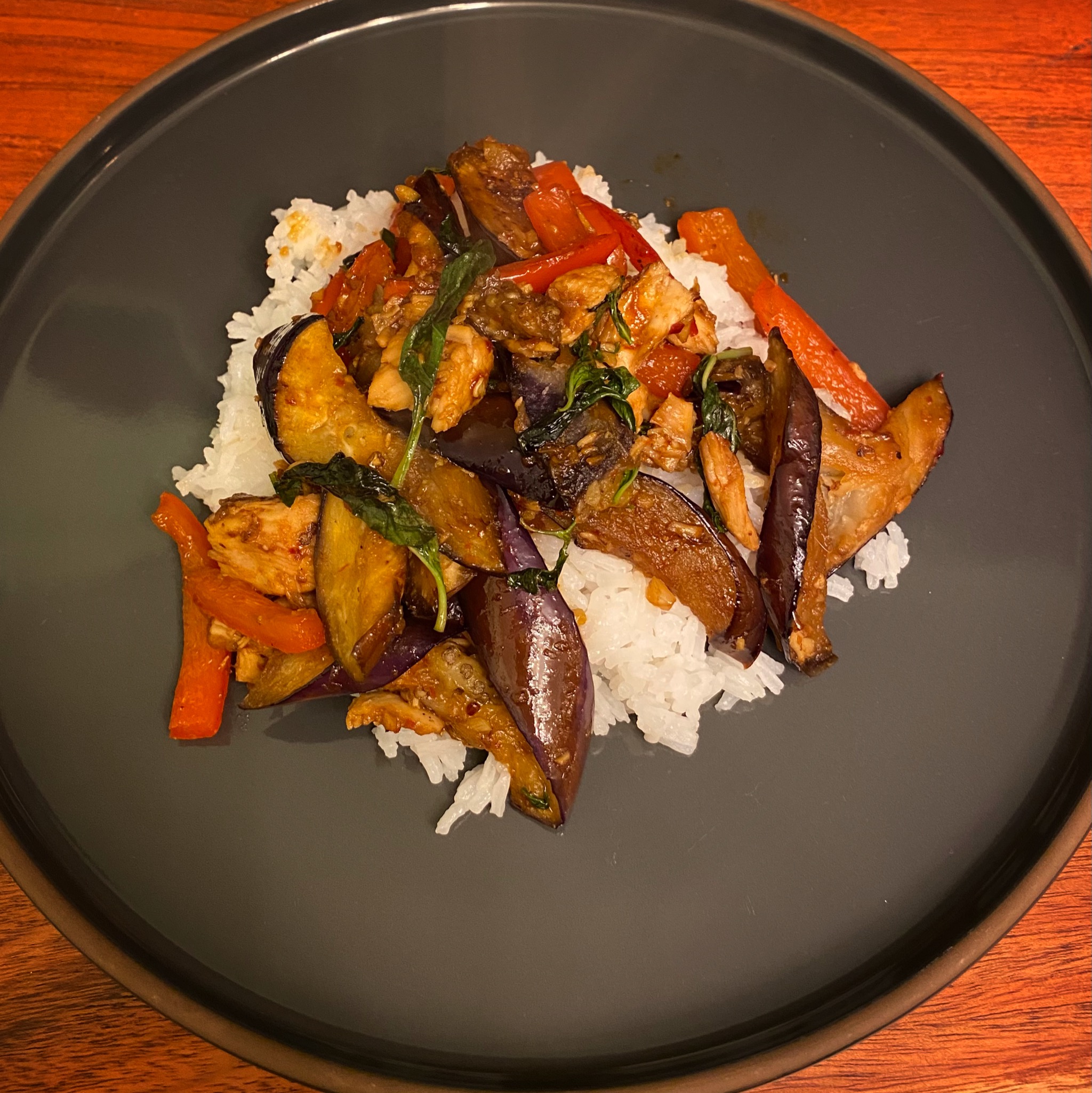
I had to make Thai food since my characters are Thai, and this Eggplant with Basil & Chili Paste Stir-Fry is one of my favorites. Though the original recipe does not contain bell peppers, I always add them for color, and I had to include a red bell pepper this time as a nod to my story (Candace, the housekeeper in “Guilt is a Little House”, always includes something red in every meal). 

https://hot-thai-kitchen.com/eggplant-chili-paste-stir-fry/#tasty-recipes-6401-jump-target

Hot Thai Kitchen is a great resource for Thai cooking—Pailin hasn’t steered me wrong yet. A few notes:

  • For the first sauce ingredient—Thai chili paste—the recipe links to another recipe for a homemade version. If you don’t have time or don’t want to do this, no problem! I use a store-bought Thai chili paste in oil (see photo). It’s delicious, slightly sweet, and only mildly spicy. If you like it spicier, you can always add more Thai chilis, as that’s the source of this dish’s heat.
  • I like to add a teaspoon of brown sugar to the sauce. I enjoy the little bit of sweetness, and it adds great caramelized color to the final dish. Totally optional; just my personal taste.
  • I used diced chicken breast instead of ground chicken because I prefer that. Both are great.
  • Don’t sub Italian/globe eggplant for the Chinese or Japanese eggplant. Italian eggplant has a different texture and more water.
  • Don’t skimp on the Thai basil! Thai basil has a unique licorice flavor that really shines in this dish.

Delicious Horror: Ayida Shonibar

Welcome back to Delicious Horror: Silk & Sinew edition! Today, we’re chatting with Ayida Shonibar. I’m very lucky to have recently received an ARC of Silk & Sinew. I flipped to Ayida’s story earlier today and was hooked with the first line. Let’s learn more about the author and the story!

Ayida Shonibar (she/they) writes dark and wistful speculative fiction about misfits, monsters, mischief-makers. Spanning genres and age categories, their short stories, essays, and poetry have appeared in various publications, including If There’s Anyone Left, Wilted Pages (Shortwave Publishing), Luminescent Machinations (Neon Hemlock), Nature Futures, Night of the Living Queers (Wednesday Books), and Transmogrify! (Harper Teen), among others. You can find more information at ayidashonibar.com.

“An Unholy Terroir”

My story defines monstrosity by the eye of the beholder. For many diasporic folks, identities are influenced by surroundings—including by people who may not understand, appreciate, or care about the contexts immigrants come from. When such perspectives turn into predominant sources of feedback regarding who someone is, these views become all too easy to internalise, to start considering unambiguously true about oneself. “An Unholy Terroir” is a diaspora story about the community environments that (literally) shape us, for better or for worse.

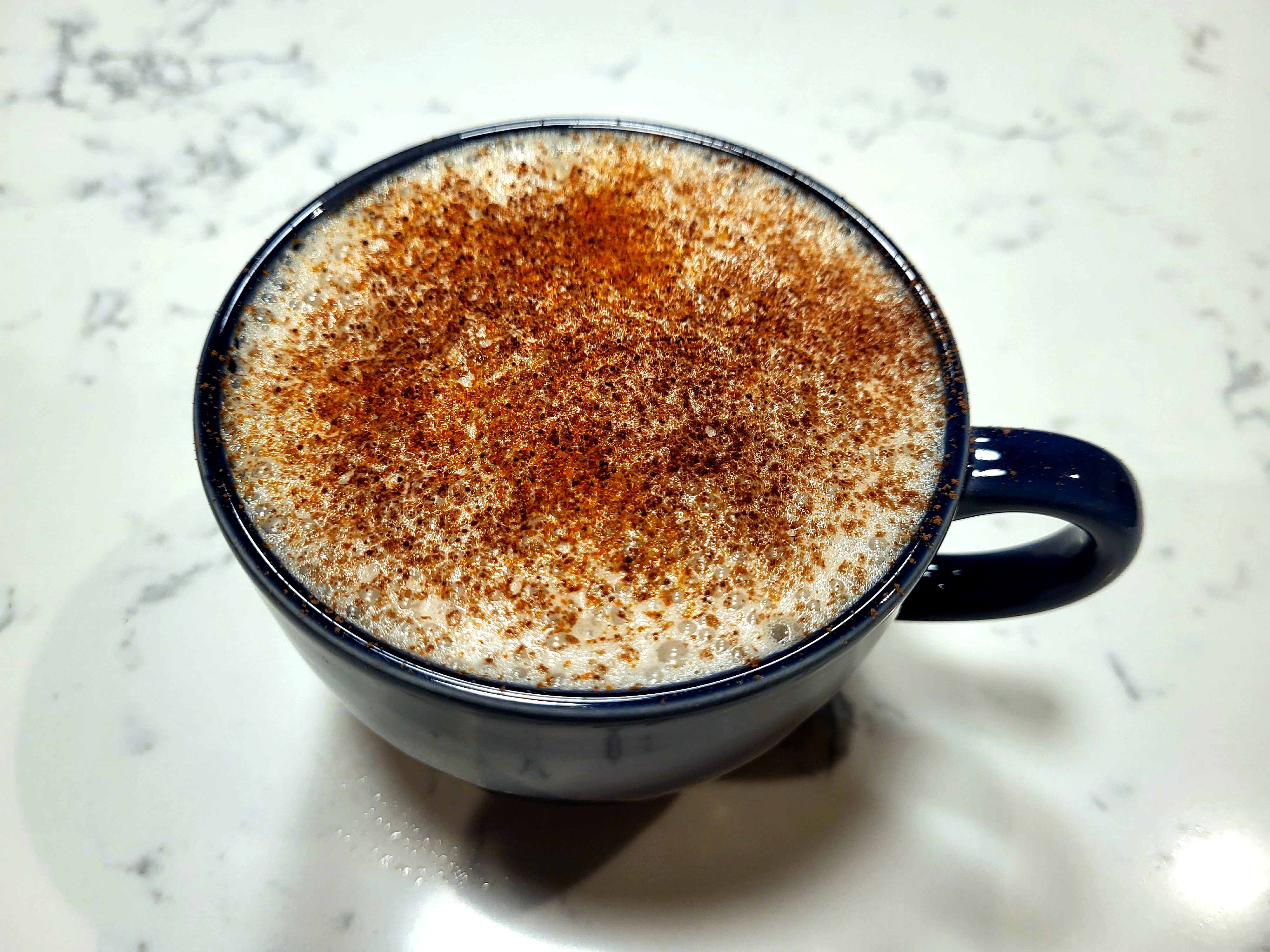
I made an abomination of a herbal tea—fruity blueberry, brewed in a style inspired by masala chai, served with a topping of cocoa and red chilli powder—and I enjoyed drinking it!

I often try mixing ingredients and preparation techniques based on things I like from various cooking traditions. Some of what emerges out of this process can only be described as monstrous. I love fruit teas from all over the world (some of my favourites are pomegranate and orange). I crave spice flavours that make me feel alive. I relish the smooth texture of milky chai. And I adore rich cocoa. The combination of these characteristics blends together perfectly to my taste.

This drink, I imagine, sounds quite off-putting to most people. It only works for me because I already like the individual components from their variety of sources. Every encounter I’ve had with each of them has entrenched the reasons I like them and developed my understanding of what about them appeals to me. Not all things I like fit together in a way I enjoy, of course, but these particular features do. And since my acquired tastes have grown out of the specific experiences I’ve had, they reflect my diasporic journey in a way that might not make gustatory sense to anyone else. That’s how this recipe matches my story in Silk & Sinew.

Ingredients

  • ground cinnamon
  • ground nutmeg
  • ground clove
  • ground green cardamom
  • water
  • milk
  • blueberry herbal tea
  • unsweetened cocoa powder
  • red chilli powder

Steps

  1. In a saucepan, add cinnamon, nutmeg, clove, and cardamom to water. Bring to a boil.
  2. Reduce heat, add blueberry herbal tea and milk, and simmer briefly.
  3. Sieve tea mixture and aerate/froth.
  4. Optional: add additional aerated/frothed milk for a creamier texture.
  5. Sieve cocoa and red chilli powder onto the tea as toppings.

Note: I use approximate quantities of ingredients based on personal taste rather than measuring them out. If unsure, try starting with 0.5 cup of water, 1.5 cups of milk, 1 teabag or equivalent loose leaf, and minimal spices and toppings. A higher water-to-milk ratio intensifies the flavour of the spices. Adjust amounts as needed.

Delicious Horror: Geneve Flynn

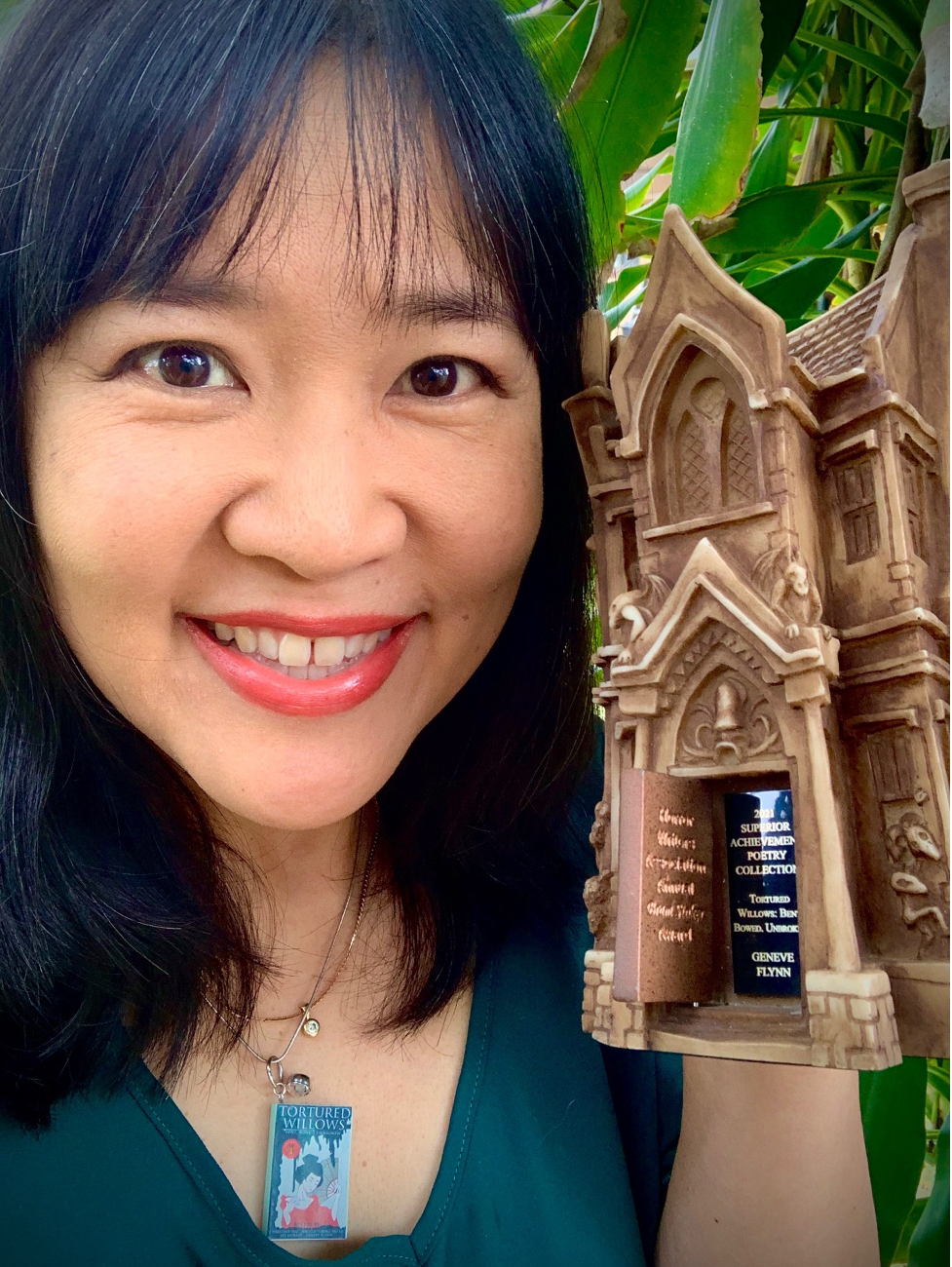
Delicious Horror presents recipes paired with stories from Silk & Sinew: A Collection of Folk Horror from the Asian Diaspora, edited by Kristy Park Kulski. First up, please welcome Geneve Flynn!

Geneve Flynn is a speculative fiction editor, author, and poet. Winner of two Bram Stoker Awards and the Shirley Jackson, Aurealis, and Brave New Weird Awards; recipient of the 2022 Queensland Writers Fellowship. Her work has been nominated and short/longlisted for the British Fantasy, Locus, Ditmar, Australian Shadows, Elgin, and Rhysling Awards, and the Pushcart Prize.

Co-editor (with Lee Murray) of Black Cranes: Tales of Unquiet Women, the dark fiction anthology which launched the grassroots movement in Asian women’s horror writing in 2020. Collaborator (with Lee Murray, Christina Sng, and Angela Yuriko Smith) of the internationally acclaimed dark poetry collection, Tortured Willows: Bent, Bowed, Unbroken.

Her work has been published by Crystal Lake Publishing, PS Publishing, Flame Tree Publishing, PseudoPod, and Written Backwards. Geneve serves on the Horror Writers Association’s Diverse Works Inclusion Committee. She is Chinese, born in Malaysia, and now calls Australia home.

Read more at www.geneveflynn.com.au.

“If I Am to Earn My Tether”

My story examines the choices our ancestors make that shape the lives we have: our privilege, advantage, perhaps even guilt. Some decisions are honorable, others less so, but virtually all, I believe, are made for the benefit of the next generation. The question is, how do we live with these choices and what do they say about who we are?

My story also involves sand piracy and colonialism.

Singapore is a glittering edifice of development and business. All this progress requires land. The city-state is also the biggest importer of sand globally, and has increased its landmass by twenty-two percent via land reclamation, sourcing sand from the sea beds and its poorer neighbors, resulting in untold environmental damage and population displacement. I wondered how the land and indigenous peoples might fight back. My answer involves the myth of the polong and pelesit: a tiny female homunculus born from the blood of a murder victim and her pet grasshopper. 

Picture credit: John Leong, Pixabay

There’s a scene at the beginning of the story where the main character meets with a sand broker. The two men are in an open-air market and the broker is enjoying his breakfast of coffee and coconut jam (kaya) slathered on toast. This is an iconic breakfast in Singapore, and usually includes a couple of creamy soft-boiled eggs seasoned with soya sauce and white pepper, for dipping. The coffee is sweet and strong and made with evaporated milk, and the warm kaya toast encloses a heart-stopping slab of cold butter. The combination may sound odd but it really works. It’s a dreamy amalgamation of salty, eggy, buttery, peppery, coconutty goodness.

Here’s the link and YouTube video for the overall recipe. You may be able to buy a jar of coconut jam from an Asian supermarket; if you can’t and would like to try your hand at making kaya yourself, check out the third link below.